Astrazeneca plc has exercised an option under its collaboration with Pinetree Therapeutics Inc. to obtain an exclusive global license to develop and commercialize PTX-299, a first-in-class bispecific antibody degrader targeting EGFR. The option exercise triggers a $25 million payment to Pinetree.
Laguna Biotherapeutics Inc. has obtained IND clearance from the FDA for its cancer immunotherapeutic LGNA-100 (QUAIL-100). The planned first-in-human phase I study will evaluate LGNA-100 in pediatric and young adult participants with high-risk acute leukemias and myelodysplastic syndromes following αβ-depleted hematopoietic stem cell transplantation (HSCT) to prevent leukemic relapse.
Tacalyx GmbH has selected its first clinical candidate, TCX-201, and secured €11 million (US$12.8 million) in a first closing of its seed extension round to support the program’s progression through preclinical development. TCX-201 is an antibody-drug conjugate (ADC) against an undisclosed tumor-associated carbohydrate antigen (TACA).
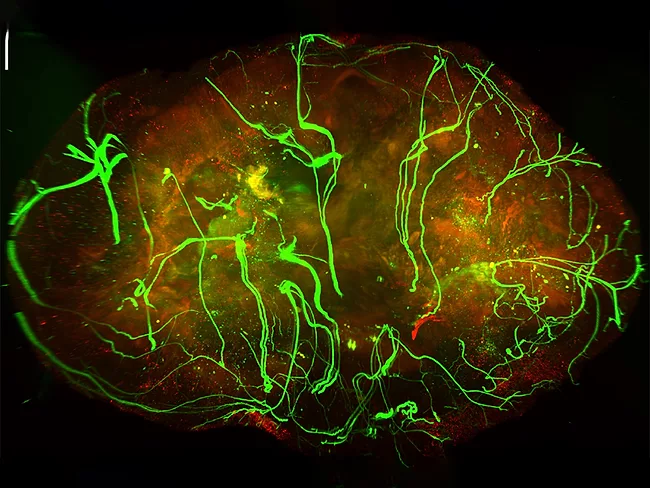
Innervation by the sympathetic nervous system is typically a boon to tumors. But researchers from Weill Cornell Medicine and colleagues have shown that in some cases, the relationship between tumors and the nervous system is more complex. Depending on context, innervation can either assist or obstruct tumor growth. “The nervous system typically has been considered as a driver of cancer growth, but here we’ve found that it can be a brake on cancer growth in some contexts,” said David Simon, an assistant professor of biochemistry and biophysics at Weill Cornell Medicine.
Shanghai Yingli Pharmaceutical Co. Ltd. has divulged new nitrogen-containing heterocyclic compounds acting as N-glycosylase/DNA lyase (OGG1) inhibitors potentially useful for the treatment of cancer, autoimmune disease and inflammatory disorders.
Astrazeneca AB has reported new antibody-drug conjugates (ADCs) comprising an antibody or antigen-binding fragment covalently linked to cytotoxic drug potentially useful for the treatment of cancer.
T-cell engagers (TCEs) drive synthetic antitumor immunity by bypassing endogenous T-cell priming and directly inducing tumor cell killing. In prostate cancer, targeting prostate-restricted antigens such as STEAP2, combined with CD8-guided TCE formats that favor cytotoxic T-cell engagement, offers a strategy to reduce cytokine release while maintaining antitumor activity.
Evolveimmune Therapeutics Inc. has announced the nomination of a development candidate against a solid tumor target as part of its ongoing partnership with Abbvie Inc., triggering an $18 million milestone payment to Evolveimmune.
Cervical cancer (CaCx) remains one of the most frequent female malignancies, causing over 300,000 deaths every year. Persistent infection with high-risk human papillomaviruses (HPV), particularly HPV16 and HPV18 strains, drives oncogenesis and tumor maintenance through continual expression of HPV oncogenes E6 and E7. A potential strategy to overcome limitations of current treatments is the development of targeted therapies that exploit alterations in gene expression in CaCx.
 RSS
RSS