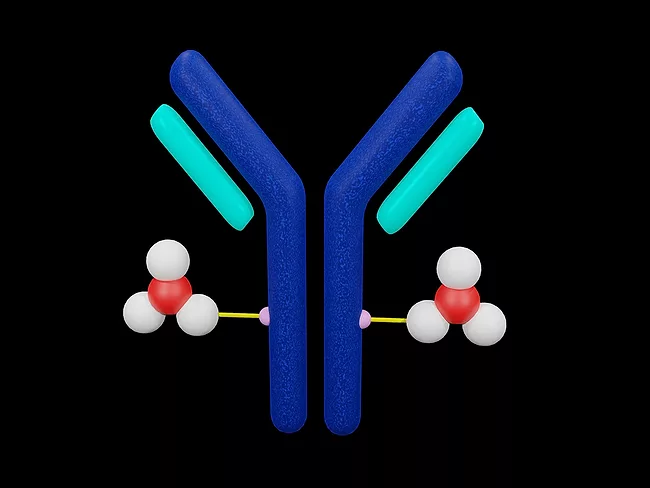
Genmab A/S, in collaboration with Biontech SE, has presented data on a novel OX40 agonist antibody –Hexabody-OX40 (GEN-1055/BNT-315), developed using Genmab’s proprietary Hexabody platform, which promotes the formation of antibody hexamers upon target binding to cell surfaces.
U.S. Precision Medicine Inc. has announced plans to use artificial intelligence (AI) technology to support work on its small-molecule drug candidate for cancer.
Researchers from Uppsala University published data from a study that aimed to reveal and validate cancer vulnerabilities to immune checkpoint blockade (ICB) therapy in triple-negative breast cancer (TNBC). A human Tumor-Immune co-Culture System (TICS), which consisted of primary human lymphocytes from healthy blood donors co-cultured with human cancer cells, was optimized to perform mechanistic investigation of clinically approved ICB drugs.
Shanghai Leadingtac Pharmaceutical Co. Ltd. has divulged proteolysis targeting chimera (PROTAC) compounds comprising an E3 ubiquitin ligase binding moiety covalently linked to a GTPase KRAS (G12D mutant) targeting moiety reported to be useful for the treatment of cancer.
Chengdu Zeling Biomedical Technology Co. Ltd. has identified poly(ADP-ribose) polymerase 1 (PARP-1; ARTD1) inhibitors reported to be useful for the treatment of cancer.
Nine Square Therapeutics Inc. has disclosed mucolipin-1 modulators reported to be useful for the treatment of metabolic disease, neurodegeneration, aging, immunological disorders, inflammatory disorders, cardiovascular disorders, lysosomal storage disease and cancer.
Ygion Biomedical GmbH has completed a series A financing round of €15 million (US$ 16.3 million) to support the development of individualized neoantigen-based cancer vaccines.
Pheon Therapeutics Ltd. has completed a $120 million series B financing to fund the development of its pipeline of differentiated antibody-drug conjugates (ADCs) for cancer through clinical proof of concept.
Cancervax Inc. has announced that its University of California, Los Angeles (UCLA) research team has achieved a critical milestone by creating a process to add any antibody to lipid nanoparticles (LNPs) using click chemistry, for targeting cancer cells.
 RSS
RSS