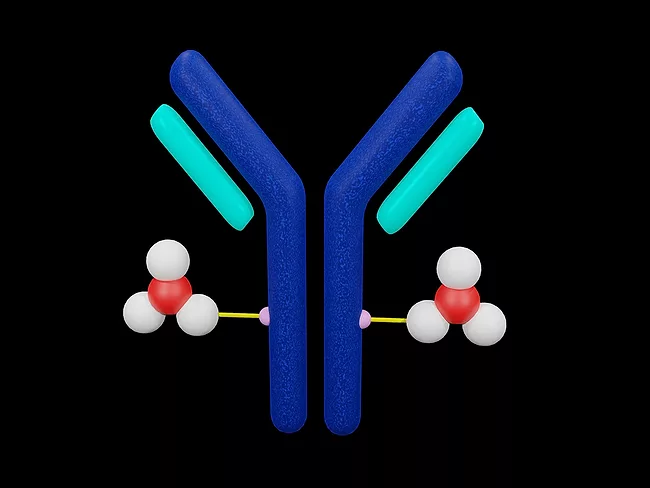
SSO-110, also known as DOTA-JR11 or satoreotide tetraxetran, is a somatostatin SST2 receptor (SSTR2) antagonist that targets a higher number of binding sites and stays longer in SSTR2-positive tumors compared to SST2 receptor agonists. It is currently in clinical development as [177Lu]Lu-SSO-110 for small-cell lung cancer (SCLC). Ariceum Therapeutics GmbH has revealed preclinical data on [177Lu]Lu-SSO-110 as well as another SSO-110-based radiopharmaceutical, [225Ac]Ac-SSO-110, which yielded better results than DOTA-TATE-conjugated isotopes.
Medigene AG has selected its lead candidate for MDG-2021, a T-cell receptor engineered T-cell (TCR-T) therapy targeting KRAS G12D with human leukocyte antigen (HLA)-A*11 being developed in combination with the company’s PD1-41BB costimulatory switch protein (CSP) technology.
Bispecific CD20×CD3 T-cell engagers have shown efficacy in hematological malignancies; however, associated toxicities such as cytokine release syndrome and immune effector-associated neurotoxicity syndrome limit their use.
Exelixis Inc. has divulged membrane-associated tyrosine- and threonine-specific Cdc2-inhibitory kinase (PKMYT1) inhibitors reported to be useful for the treatment of cancer.
Scientists at Minghui Pharmaceutical (Hangzhou) Ltd. and Minghui Pharmaceutical Inc. have synthesized antibody-drug conjugates comprising a humanized monoclonal antibody targeting insulin-like growth factor 1 receptor (IGF-1R) linked to a cytotoxic drug through a linker and reported to be useful for the treatment of cancer.
Scientists at Beigene Ltd. and Beigene Switzerland GmbH have disclosed antibody-drug conjugates comprising a carcinoembryonic antigen-related cell adhesion molecule 5 (CEACAM5; CEA; CD66e) binding antibody or antigen binding fragments linked to a cytotoxic drug through a linker.
Bladder cancer is characterized by a high recurrence rate, with limited therapeutic options available. There is a need to discover new therapeutic targets and approaches to overcome this.
Residual leukemic stem cells (LSCs) are leukemia relapse-initiating cells that mediate treatment resistance in response to therapy stress. Different from normal hematopoietic stem cells (HSCs), both blasts and LSCs express T-cell immunoglobulin mucin-3 (TIM-3) on the surface.
Targeting topoisomerase 2 (TOP2) is crucial in AML, and researchers from Wakunaga Pharmaceutical Co. Ltd. have developed and tested racemic WAC-224, a quinolone TOP2 inhibitor, and (R)-WAC-224 as a potential approach for AML treatment.
Genfleet Therapeutics (Shanghai) Co. Ltd. has obtained clearance from China’s National Medical Products Administration (NMPA) to advance GFH-375 (VS-7375) into a phase I/II study in patients with advanced solid tumors with KRAS G12D mutation.

 RSS
RSS