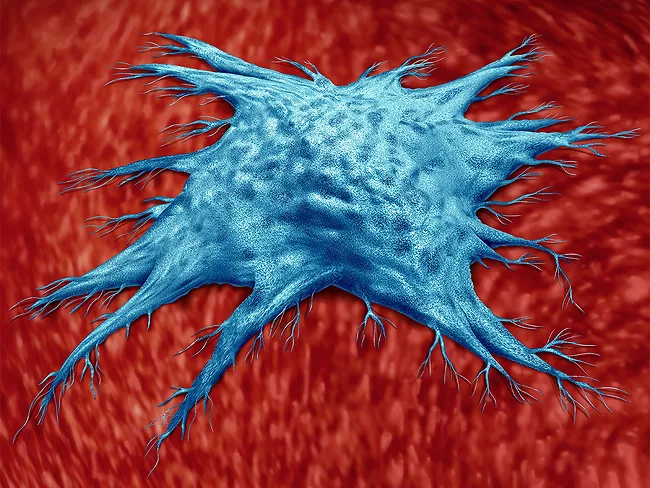
Senescence is a hallmark of aging, and senescent cells have a reputation to match. They are ‘zombie cells,’ sort of dead themselves but alive enough to poison their surroundings through senescence-associated secretory phenotype (SASP). The reality, though, is more complex.
Janssen Pharmaceutica NV and Johnson & Johnson (China) Investment Ltd. patents disclose new menin (MEN1)/MLL interaction inhibitors reported to be useful for the treatment of cancer.
Gen1e Lifesciences Inc. has prepared new mitogen-activated protein kinase 14 (MAPK14; MAPK p38α) inhibitors reported to be useful for the treatment of cancer, inflammatory disorders, autoimmune diseases, viral infections, acute respiratory distress syndrome, amyotrophic lateral sclerosis, chronic obstructive pulmonary disease and cystic fibrosis.
Research at Idorsia Pharmaceuticals Ltd. has led to the discovery of aryl- and heteroaryl-sulfonamide derivatives acting as C-C chemokine receptor type 8 (CCR8) antagonists.
CAR T-cell therapy that targets BCMA is an effective option for treating relapsed/refractory multiple myeloma, but there is a lack of persistence due to the inability to develop a memory phenotype.
CSPC Pharmaceutical Group Ltd. has obtained clearance from China’s National Medical Products Administration (NMPA) to conduct clinical trials in China with the first mRNA-lipid nanoparticles (LNP)-based CAR T-cell injection, SYS-6020.
Defence Therapeutics Inc. has demonstrated that its second-generation ARM-X anticancer vaccine is therapeutically effective against pre-established ovarian cancer (ID8 model) when combined with an anti-PD-1 immune checkpoint inhibitor.
CDR-Life Inc. has expanded its pipeline of novel T-cell engagers (TCE) with the addition of CDR-813 and CDR-505. CDR-813 is a highly potent and selective TCE candidate targeting tumors expressing PRAME (preferentially expressed antigen in melanoma) in HLA-A*02:01 patients.
 RSS
RSS