Scientists at Foshan Ionova Biotherapeutics Co. Ltd., Guangdong Touchstone Translational Research Institute Co. Ltd. and Shenzhen Ionova Life Science Co. Ltd. have described tricyclic compounds acting as cyclin-dependent kinase (CDK) inhibitors, particularly CDK1/cyclin B and/or CDK2/cyclin E1 and/or CDK4/cyclin D3 and/or CDK6/cyclin D3 inhibitors, reported to be useful for the treatment of cancer.
Dana-Farber Cancer Institute Inc. has disclosed covalent inhibitors of serine/threonine-protein kinase A-Raf (ARAF) reported to be useful for the treatment of carcinoma and melanoma.
Researchers from the Chinese Academy of Sciences and affiliated organizations discovered a new ubiquitin-specific protease 7 (USP7) inhibitor, YCH-2823, being developed as a potential anticancer agent.
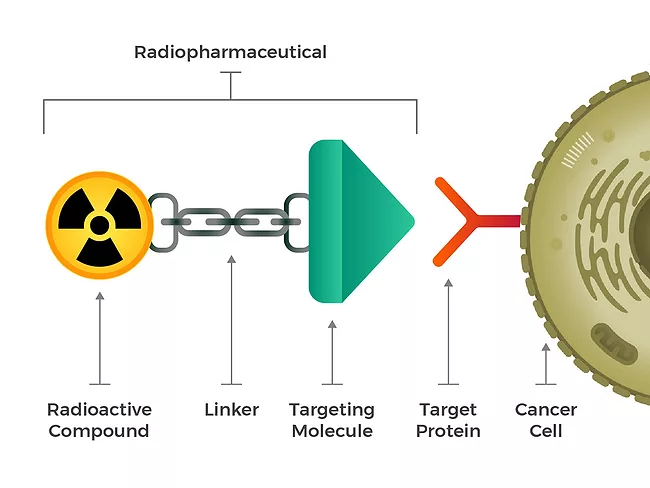
Peptidream Inc. has reported that an early-phase clinical trial for 64Cu-PD-32766, a 64Cu-labeled radiopharmaceutical targeting carbonic anhydrase IX (CAIX), for patients with clear cell renal cell carcinoma has been approved by the clinical review board of the National Cancer Center Hospital East in Japan.
Researchers from Haisco Pharmaceutical Group Co. Ltd. presented the discovery and preclinical characterization of a brain-penetrating BRAF paradox breaker, HSK-42360, being developed for the treatment of BRAF-driven cancers. HSK-42360 proved to be a potent BRAF V600E inhibitor (IC50=5 nM) with selectivity over wild-type BRAF.
The Chinese National Institutes of Pharmaceutical Research & Development has divulged nitrogen-containing heterocyclic compounds acting as poly(ADP-ribose) polymerase 1 (PARP-1; ARTD1) inhibitors reported to be useful for the treatment of cancer.
Ono Pharmaceutical Co. Ltd. has synthesized monoacylglycerol lipase ABHD6 inhibitors reported to be useful for the treatment of cancer, pain, neurological, inflammatory, autoimmune and metabolic diseases.
Shanghai Jemincare Pharmaceuticals Co. Ltd. has disclosed phosphorus-containing compounds acting as androgen receptor antagonists reported to be useful for the treatment of cancer, alopecia, acne, hirsutism and more.

 RSS
RSS