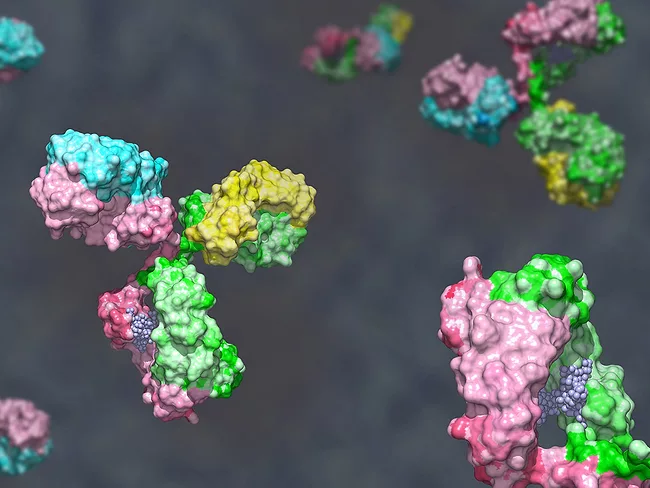
Researchers from Agni Bio Inc. reported the preclinical profile of AGB-201, a bispecific antibody designed to simultaneously target EDB and LTβR, while minimizing unwanted immune activation.
Zelluna ASA has received approvals from the U.K.’s Medicines and Healthcare products Regulatory Agency (MHRA) and research ethics committee for its clinical trial application (CTA) for ZI-MA4-1, Zelluna’s lead T-cell receptor-based natural killer (TCR-NK) product candidate.
Beijing Konruns Pharmaceutical Co. Ltd. has patented new transforming acidic coiled-coil-containing protein (TACC) inhibitors described as potentially useful for the treatment of cancer.
Chong Kun Dang Pharmaceutical Corp. has synthesized poly(ADP-ribose) polymerase 1 (PARP-1; ARTD1) inhibitors designed for use in the treatment of cancer and inflammatory disorders.
Chugai Pharmaceutical has reported a new humanized antibody (Ab, SOF-10) that targets latent TGF-β1 and selectively blocks protease- and integrin αVβ8-mediated latent TGF-β1 activation.
Researchers from Shandong First Medical University (China) and collaborators have published a comprehensive study on the screening, synthesis, structure-activity relationship and biological evaluation of 1,2,4-oxadiazole derivatives that selectively inhibit SPHK2.
At the ongoing AACR Immuno-Oncology Conference (AACR IO) in Los Angeles, Ampersand Biomedicines Inc. gave a presentation on promising results in the field regarding AMP-410, an anti-VEGF/4-1BB antibody construct that limits 4-1BB activation in VEGF-rich tumor types, thus achieving durable efficacy.
 RSS
RSS