CAR T cells have been groundbreaking for the treatment of B-cell cancers. But 8 years after Kymriah (tisagenlecleucel, Novartis AG) became the first CAR T-cell therapy to be approved, there are no CAR Ts approved for solid tumors.
CSPC Zhongqi Pharmaceutical Technology (Shijiazhuang) Co. Ltd. has divulged new proteolysis targeting chimeras (PROTACs) comprising an E3 ubiquitin ligase-binding moiety coupled to an EGFR-targeting moiety via a linker.
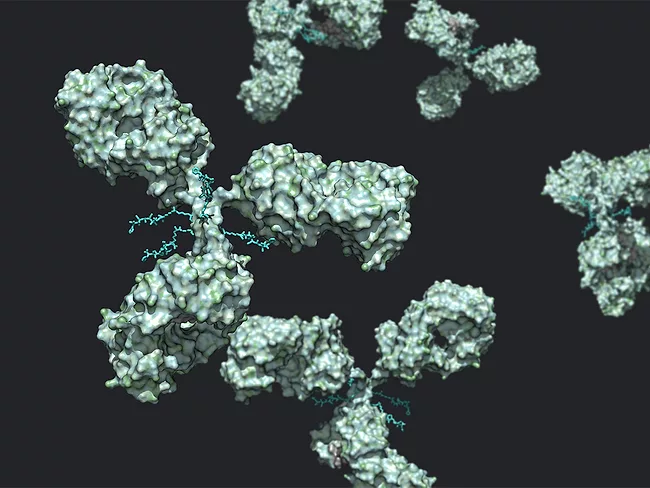
Researchers from Promatix Biosciences Ltd. presented preclinical data on PBS29301A, a first-in-class bispecific ADC developed using Promatix’s proprietary proteomics-based discovery platform.
In a recent study published in Molecular Therapy: Oncology, researchers from the City of Hope National Medical Center and Beckman Research Institute (USA) and collaborators aimed to identify differentially expressed genetic pathways in glioblastoma multiforme (GBM) tumor cells after 48 hours of hypoxia treatment by performing RNA sequencing.
Merck Sharp & Dohme LLC (MSD) has reported compounds acting as Werner syndrome ATP-dependent helicase (WRN; RECQ3; RECQL2) inhibitors designed for use in the treatment of cancer.
Gan & Lee Pharmaceuticals Co. Ltd. has disclosed proteolysis targeting chimera (PROTAC) compounds comprising an E3 ubiquitin ligase-binding moiety covalently linked to a probable global transcription activator SNF2L2 (SMARCA2; BAF190B; SNF2-α)- and/or SMARCA4-targeting moiety.
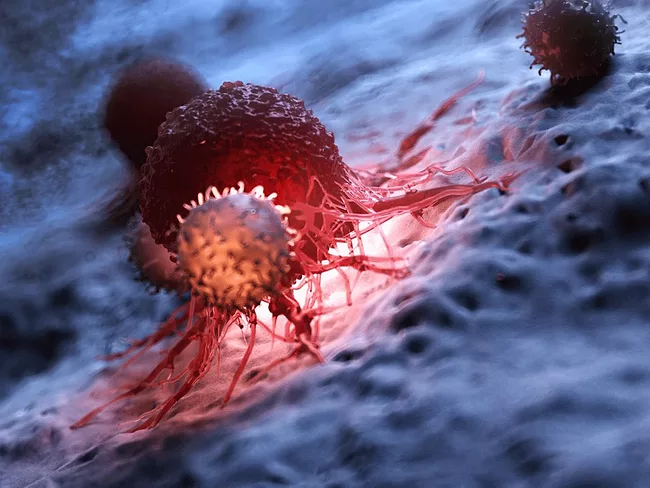
To overcome the challenges of current CAR T-cell strategies and enhance their efficacy and specificity for acute myeloid leukemia, researchers at the Sino-American Cancer Foundation and collaborating institutions have developed a nanobody-based CAR T-cell platform directed against C-type lectin-like molecule-1 (CLL-1).
 RSS
RSS



.webp?height=488&t=1670008838&width=650 "Acute myeloid leukemia")