Gate Bioscience Inc. has disclosed protein transport protein Sec61 complex inhibitors reported to be useful for the treatment of cancer, viral infections, malaria, prion infection, light chain amyloidosis, autoimmune diseases and renal and urinary system genetic disorders.
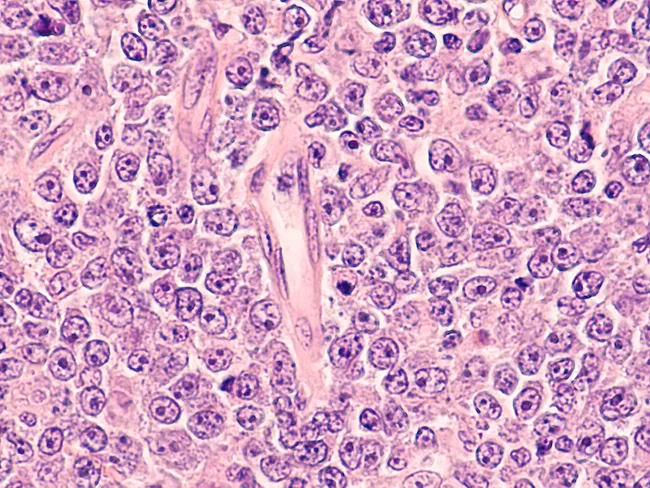
Diffuse large B-cell lymphomas (DLBCL) with mutations in B-cell translocation gene 1 (BTG1) present poor outcomes and extensive dissemination. Missense mutations of BTG1 are specific to germinal center-derived B cell lymphomas, which suggests an oncogenic function that depends on the specific cellular context. In a recent study published in Science, researchers from Weill Cornell Medicine and collaborators investigated how BTG1 mutations further contribute to the pathogenesis of these tumors.
In cancer cells that aberrantly express cystine transporter solute carrier family 7 member 11 (SLC7A11), high rates of cystine uptake and cystine reduction to cysteine occur. When combined with glucose starvation, this results in a massive accumulation of intracellular disulfide molecules and rapid cell death. However, the mechanisms underlying this type of cell death remain unclear.
Recent findings unveiled that high serum levels of the molecular marker microRNA 371 correlate with the clinical stage and metastasis of seminomas (tumor of the testis germ cells) and nonseminomas. The expression of miR-371a-3p was evaluated in a cohort of patients with stage IIA/B seminoma and nonseminoma. Expression of miR-371a-3p was found to be positive in all 12 metastatic patients with seminoma or nonseminoma and was negative in 3 out of 4 nonmetastatic cases.
Researchers from the Centro Nacional de Investigaciones Oncológicas aimed to identify pathways that contribute to the metabolic reprogramming ability of cancer cells upon resistance to ataxia-telangiectasia-mutated (ATM) inhibition. Metabolism-centered CRISPR screening identified Kelch-like ECH-associated protein 1 (KEAP1), which is an oxidative stress sensor that controls the Nrf2-regulated antioxidant pathway, as a key factor involved in desensitizing cancer cells to ATM inhibition.
Beigene Co. Ltd. has divulged proteolysis targeting chimeras (PROTACs) comprising an E3 ubiquitin ligase binding moiety covalently linked to a mitogen-activated protein kinase kinase kinase kinase 1 (MAP4K1; HPK1; MEKKK1)-targeting moiety reported to be useful for the treatment of cancer.
Grey Wolf Therapeutics Ltd. has identified phenyl-sulfamoyl-benzoic acid derivatives acting as endoplasmic reticulum aminopeptidase 1 (ERAP1) inhibitors reported to be useful for the treatment of cancer, viral infection, inflammatory and immunological disorders.
Receptor-interacting serine/threonine-protein kinase 2 (RIPK2) is a kinase protein that plays key roles in inflammation and antimicrobial response through the NF-kB signaling pathway, as well as it is known to activate c-MYC, which is involved in the progression of several malignancies, such as prostate cancer.
Over half of the children with high-risk neuroblastoma experience late relapses caused by minimal residual disease. Since chimeric antigen receptor (CAR) T-cell therapy has shown efficacy against minimal residual disease in pediatric patients with hematologic malignancies, several CAR T-cell therapies are being investigated for neuroblastoma.

 RSS
RSS