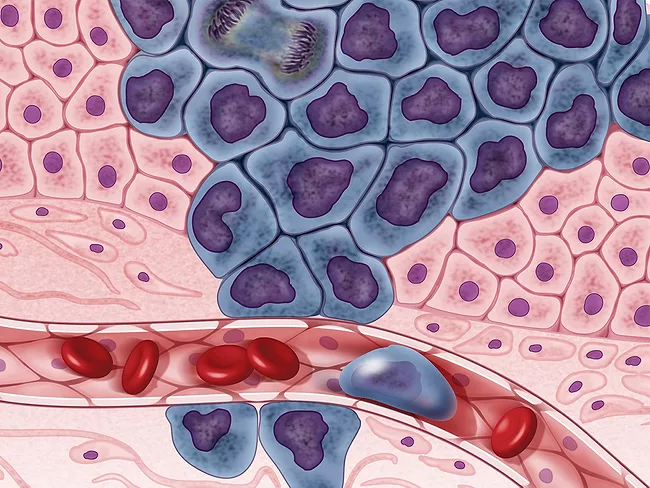
Tumor-specific CD8 T cells play a prominent role in antitumor immunity. However, these cells regularly enter a state of exhaustion due to chronic antigen stimulation within the tumor microenvironment.
Oncolytic virus immunotherapy has been proposed as a step forward for cancer treatment because it can kill cancer cells while activating the immune system. However, its current clinical application is limited because targeting deep-seated cancers is challenging and because the complement and innate immunity rapidly clear oncolytic viruses administered systemically.
Pancreatic cancer still remains a highly lethal disease, with a 5-year survival rate of <10%. It is characterized by strong stromal activation leading to pro-tumorigenic extracellular matrix deposition. Recent findings in preclinical models have unveiled that targeting desmoplasia may improve chemotherapy efficacy and impede metastasis in pancreatic cancer.
Lift Biosciences Ltd. and Minaris Regenerative Medicine GmbH have entered into a development and manufacturing partnership for N-Lift, Lift's first-in-class neutrophil progenitor-based leukocyte infusion therapy for the treatment of various cancer indications, including pancreatic cancer, lung cancer and other solid tumors.
In advanced or metastatic prostate cancer (PCa), patients may reach a stage where they do not respond to therapy. This stage is associated with chromosomal instability (CIN) and allow cells, up to a certain threshold, to adapt to therapy. However, a Mayo Clinic study has found a way to push that line so that cancer cells are so aberrant that they die.
Bristol Myers Squibb Co. has presented macrocyclic peptides acting as programmed cell death 1 (PD-1)/PD-1 ligand 1 (PD-L1) interaction inhibitors reported to be useful for the treatment of cancer and infections.
Genentech Inc. has discovered sulfonimidamide compounds acting as NLRP3 inflammasome inhibitors reported to be useful for the treatment of cancer, autoimmune disease and cardiovascular, dermatological, respiratory, neurological, gastrointestinal and inflammatory disorders, among others.
Recurium IP Holdings LLC has patented antibody-drug conjugates (ADCs) comprising antibodies targeting inactive tyrosine-protein kinase transmembrane receptor ROR1 covalently bound to exatecan through a linker reported to be useful for the treatment of cancer.
 RSS
RSS