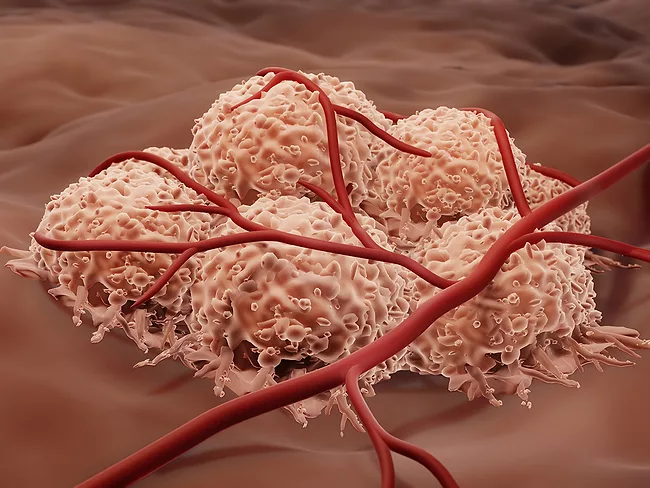
China’s National Medical Products Administration (NMPA) has cleared Shanghai Henlius Biotech Inc. to initiate a phase Ib/II trial of HLX-701 in combination with cetuximab and chemotherapy for the treatment of patients with advanced RAS/BRAF wild-type colorectal cancer.
Neok Bio Inc. has obtained IND clearance from the FDA for NEOK-001, enabling initiation of a phase I trial for solid tumors. Dosing is expected to begin in the coming months, and initial clinical data are anticipated next year.
Oncogenic KRAS mutations are among the most prevalent driver events in solid tumors, with the KRAS G12D variant constituting the dominant allele in pancreatic ductal adenocarcinoma (PDAC) and a frequent alteration in non-small-cell lung cancer (NSCLC). Researchers from Ranok Therapeutics (Hangzhou) Co. Ltd. and collaborators described the preclinical profile of RNK-08954, an oral KRAS G12D inhibitor, in both in vitro and in vivo models.
Cancer cells expand through mutations – but not just through mutations. They also change their behavior in the absence of underlying genetic alterations. Such plasticity helps the cells both adapt to the cellular stress fueled by out-of-control growth and resist targeted and chemotherapies alike. Investigators from Memorial Sloan Kettering Cancer Center and Huazhong Agricultural University have gained new insights into the underlying mechanisms of plasticity.
Novacell Technology Inc. has identified oligopeptides acting as N-formyl peptide receptor 2 (FPR2; FPRL1; LXA4) agonists described as potentially useful for the treatment of cancer and inflammatory disorders.
Gachon University and Jeonbuk National University Industry Foundation have disclosed proteolysis targeting chimera (PROTAC) compounds comprising a cereblon (CRBN) E3 ubiquitin ligase-binding moiety coupled to a serine/threonine-protein kinase PAK4-targeting moiety through a linker potentially useful for the treatment of cancer.
Hanmi Holdings Co. Ltd. has patented proteolysis targeting chimeras (PROTACs) comprising a cereblon (CRBN)-binding moiety coupled to a histone acetyltransferase p300 (EP300)-targeting moiety through a linker acting as EP300 degradation inducers reported to be useful for the treatment of cancer.
Researchers at DEM Biopharma Inc. reported preclinical findings demonstrating the efficacy of DEM-301, a bifunctional antibody-drug conjugate (ADC) engineered to selectively recognize and eliminate tumor cells that express DEM-TXX.

 RSS
RSS