Tyk Medicines Inc. has identified N-acetyl-β-D-glucosaminidase (O-GlcNAcase; OGA) inhibitors described as potentially useful for the treatment of cancer, metabolic diseases, Alzheimer’s disease and progressive supranuclear palsy.
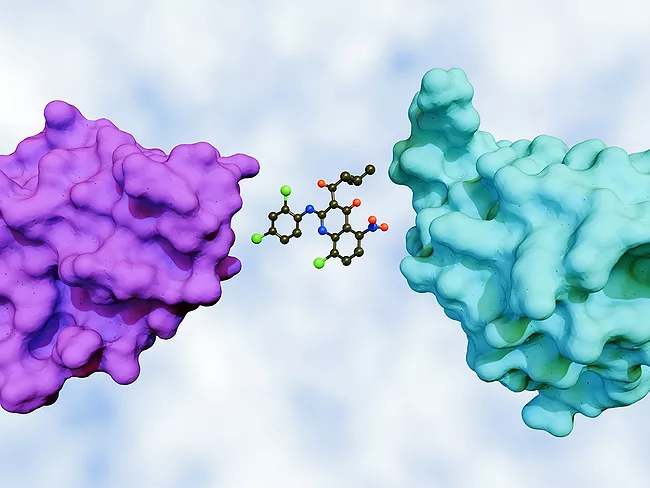
Researchers from the Institut National De La Sante Et De La Recherche Medicale, Universite de Bordeaux and Universite de Paris Cite have reported indane 1,3-dione derivatives acting as furin (PACE; PCSK3) inhibitors potentially useful for the treatment of cancer.
Chengdu Brilliant Pharmaceutical Co. Ltd. and Chengdu Xinke Pharmaceutical Co. Ltd. have disclosed drug conjugates comprising a bone-targeting moiety covalently bound to a radiolabeled-chelating agent through a linker acting as positron emission tomography (PET)/single-photon emission computerized tomography (SPECT) imaging agents. They are reported to be useful for diagnosis and treatment of bone disorders.
Effective targeted therapies against aggressive breast cancer subtypes, such as triple-negative breast cancer (TNBC), are still lacking. Developing therapeutics targeting nonenzymatic, intracellular proteins with causal roles in TNBC progression remains a significant challenge.
DNA polymerase θ (POLθ) is a specialized, error-prone DNA polymerase that promotes the repair of DNA double-strand breaks through theta-mediated end joining (TMEJ), an alternative pathway that operates independently of homologous recombination.
Third Arc Bio Inc. has closed a $52 million series A extension to advance its pipeline of multifunctional antibodies for a range of oncology and immunology & inflammation (I&I) indications.
Biodexa Pharmaceuticals plc has closed an exclusive license agreement with Otsuka Pharmaceutical Co. Ltd. for OPB-171775 (now MTX-240), a phase I-ready molecular glue intended to be developed for the treatment of gastrointestinal stromal tumors (GIST) and potentially additional indications.
Kinoteck Therapeutics Co. Ltd. has discovered nitrogen-containing heterocyclic derivatives acting as Werner syndrome ATP-dependent helicase (WRN; RECQ3; RECQL2) inhibitors potentially useful for the treatment of cancer.

 RSS
RSS