The use of DNA scaffolds could mark a turning point in HIV vaccine design. Scientists at Scripps Research and the Massachusetts Institute of Technology (MIT) have created a new vaccine platform based on DNA origami, a material that the immune system does not recognize as a threat, avoiding unwanted responses.
Henipaviruses like Nipah (NiV) and Hendra (HeV) are highly lethal, bat-borne zoonotic viruses from the Paramyxoviridae family that cause severe encephalitis and respiratory illness in humans and animals. These viruses are highly transmissible and have notable pandemic potential. Researchers are actively screening and testing numerous small-molecule compounds as potential treatments for henipavirus infections. A team at the University of Illinois Chicago and collaborators used a high-throughput screening approach to identify a focused library of analogues.
A recent publication in Cell Reports Medicine from researchers at the Washington University School of Medicine and the La Jolla Institute for Immunology presents a promising new strategy for H5N1 vaccination.
Looking to fill a treatment gap, the U.S. Biomedical Advanced Research and Development Authority (BARDA) is launching the first stage of a $100 million prize competition to support development of broad-spectrum, small-molecule antiviral therapies targeting viruses in the Togaviridae and Flaviviridae families.
Scientists at Ghent University have created a mouse model that incorporates human versions of the receptors that recognize the fragment crystallizable (Fc) region of immunoglobulin G (IgG), one of the most abundant antibodies in the blood and a key mediator of essential immune functions such as cellular activation, pathogen elimination and the regulation of inflammatory responses. These human Fcγ receptors allow the humanized mouse to more accurately reproduce IgG-driven biology, enabling more reliable and safer preclinical assays before evaluating monoclonal antibodies in clinical trials with people.
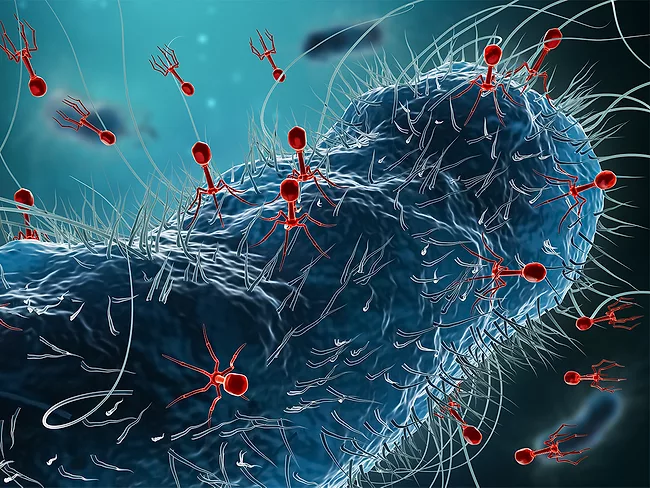
Certain chemical compounds can disable the bacterial immune systems that protect them from viruses, making the bacteria vulnerable to infection. Scientists at Indiana University have discovered a promising compound that works in different types of bacteria and could be used to develop potent and diverse phage therapies against bacterial infections, ultimately giving clinicians more options against antibiotic resistance.
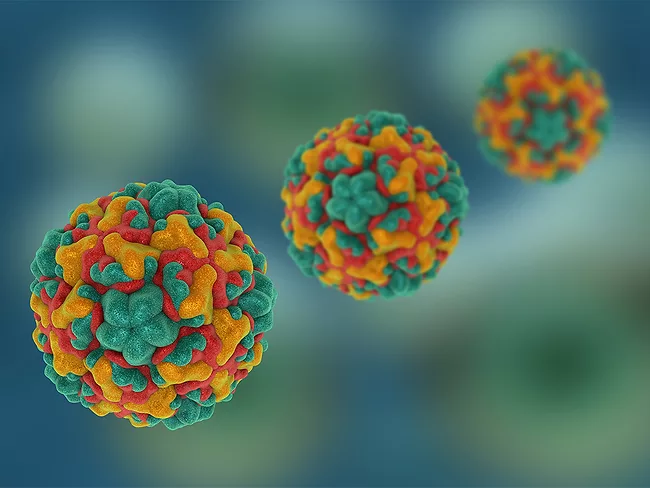
Challenges in developing antiviral agents against rhinoviruses (RVs) include their genetic heterogeneity (over 160 serotypes), rapid evolution of the viral capsid and serotype-specific immunity. To overcome these limitations, alternative approaches targeting host cellular pathways essential for viral replication have been proposed.
An Anglo-American team of researchers has devised a new computational method for quantifying Epstein-Barr virus (EBV) directly from human genome sequences and used this to identify 22 genes that link higher levels of the virus to a range of chronic diseases. The new method sets the scene for further exploration of biobank DNA sequence data to gain greater understanding of the nature and the role of the human virome, the 10(13) – largely unstudied – viral particles that coexist in humans.
 RSS
RSS