Bloomsbury Genetic Therapies Ltd. has announced it received orphan drug designations from the FDA and the European Commission for BGT-INAD, an investigational gene therapy for the treatment of infantile neuroaxonal dystrophy (INAD).
To understand the human brain, an international consortium of scientists has created the most complete atlas of this organ to date. The map reveals the anatomy, the architecture of the tissues, how or where each cell is, their function, gene expression and regulation. On Oct. 12, 2023, Science and Science Advances published a group of 21 studies that unveiled the map of the human brain, as well as the brains of nonhuman primates and mice, cell by cell, for an adult model and for the different stages of development.
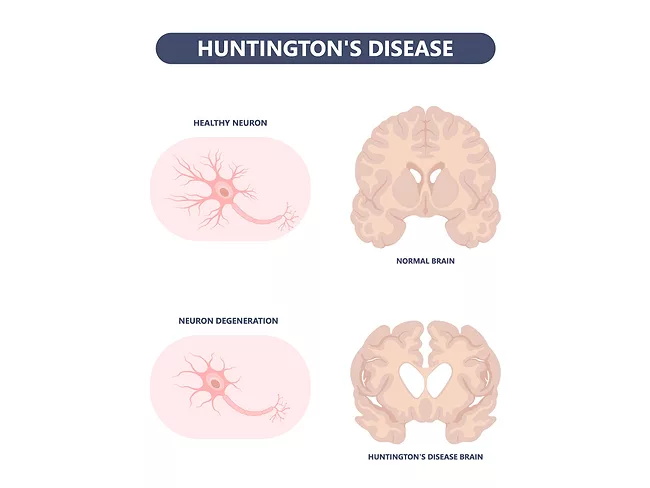
Research at Design Therapeutics Inc. has led to the discovery of conjugates consisting of a DNA-binding moiety capable of noncovalently binding to a nucleotide repeat sequence linked to a protein binding moiety through oligomeric backbone linker. They are transcription modulators reported to be useful for the treatment of Huntington’s disease.
Sodium channel protein type 10 subunit α (SCN10A; Nav1.8) blockers have been reported in a Humanwell Healthcare (Group) Co. Ltd. patent as potentially useful for the treatment of pain.
Skyhawk Therapeutics Inc. has obtained Australian human research ethic committee (HREC) approval to conduct a phase I trial of SKY-0515 for Huntington’s disease.
Takeda Pharmaceutical Co. Ltd. has identified N-(pyrrolidin-3-yl or piperidin-4-yl)acetamide derivatives acting as somatostatin SST4 receptor agonists and thus reported to be useful for the treatment of Alzheimer’s disease, depression, schizophrenia, autism, epilepsy, pain, bipolar and anxiety disorder.
Epoxysqualene-lanosterol cyclase (lanosterol synthase, OSLC) inhibitors have been reported in a University of Texas System patent as potentially useful for the treatment of amyotrophic lateral sclerosis, glioblastoma, multiple sclerosis, neurodegeneration, Parkinson’s, Alzheimer’s and Huntington’s diseases.
Escient Pharmaceuticals Inc. has patented quinoline derivatives acting as Mas-related G protein-coupled receptor member X2 (MRGPRX2) antagonists and thus reported to be useful for the treatment of pain, psoriasis, inflammatory disorders, atopic dermatitis, eczema, pruritus, urticaria and autoimmune disease, among others.
Alexion Pharmaceuticals Inc. has identified complement C1s subcomponent inhibitors reported to be useful for the treatment of immune thrombocytopenia purpura, lupus nephritis, amyotrophic lateral sclerosis, Guillain Barré syndrome, Huntington’s disease, rheumatoid arthritis, traumatic brain injury, and autoimmune hemolytic anemia, among others.
Monte Rosa Therapeutics Inc. has entered into a strategic collaboration and licensing agreement with F. Hoffmann-La Roche Ltd. to discover and develop molecular glue degraders against targets in cancer and neurological diseases previously considered impossible to drug.

 RSS
RSS