Arialys Therapeutics Inc. has closed $58 million in seed financing. The proceeds of the financing will be used to advance new precision medicines that specifically block pathogenic autoantibodies in the central nervous system (CNS) with the aim of treating neuropsychiatric diseases driven by autoimmunity.
“From one to many” is how Actio Biosciences Inc. describes its approach to drug development. The firm emerged with a $55 million series A financing and an eye for biological targets found in both rare and common diseases, starting with TRPV4, a target associated with Charcot-Marie-Tooth disease type 2C and other bone diseases.
Gain Therapeutics Inc. has received human research ethics committee (HREC) approval in Australia to initiate a phase I study of its lead drug candidate GT-02287 in development for GBA1-Parkinson’s disease. The study is expected to begin in the near term.
Precision Biosciences Inc. uses its proprietary Arcus platform to develop in vivo gene editing therapies and has outlined new data from its wholly owned and partnered pipeline.
Alzheimer’s disease (AD) has a new candidate for its treatment. Nasal anti-CD3 monoclonal antibody (MAb) reduced microglia activation in the brain of mice without its effect being dependent on the β-amyloid (Aβ) deposits characteristic of this neurodegenerative disorder. “We have done many basic studies in the laboratory on microglia. Microglia activation occurs in many neurologic diseases. One of them is multiple sclerosis (MS). And it also occurs in AD,” senior author Howard Weiner told BioWorld.
Artelo Biosciences Inc. has completed a pre-IND meeting with the FDA regarding the manufacturing, preclinical and clinical development plan for ART-26.12.
Proteros Biostructures GmbH has established a new collaboration with Orion Corp. The two companies are engaging in a joint multitarget collaboration for early-stage drug discovery projects in oncology and pain using Proteros’ discovery platform, and now have decided to combine their expertise to assemble a chemically diverse small-molecule library collection. The nonexclusive agreement enables Proteros to exclusively offer access to this high throughput screening (HTS) library to all its clients.
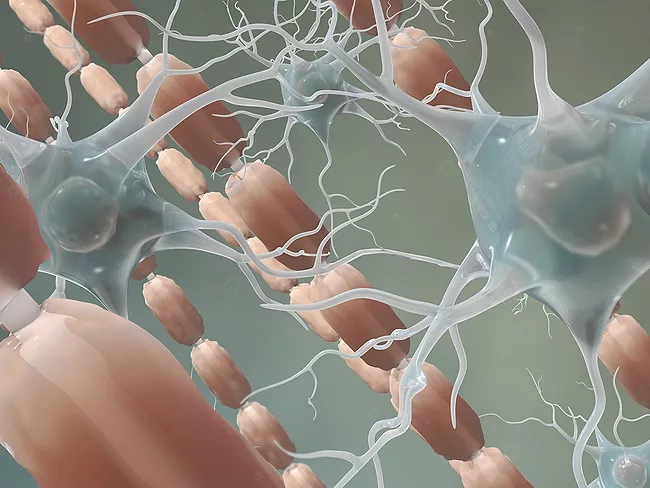
In multiple sclerosis (MS), macrophages and microglia play a dual role that could be used to treat this neurodegenerative disease. These cells promote inflammation that demyelinates neurons but also sweep away the debris of damaged myelin and produce neurotrophic factors that would allow its restoration. According to a group of scientists from the University of Hasselt in Belgium, damage or repair depends on a double switch that combines the action of two enzymes, one that desaturates and another that elongates fatty acids. By reducing the levels of these enzymes, phagocytic cells would replenish the myelin instead of engulfing it.