Insusense ApS has identified sortilin (NT3; Gp95) antagonists reported to be useful for the treatment of neurodegeneration, cancer, pain, diabetes, diabetic retinopathy, glaucoma, hearing loss and cardiovascular disorders, among others.
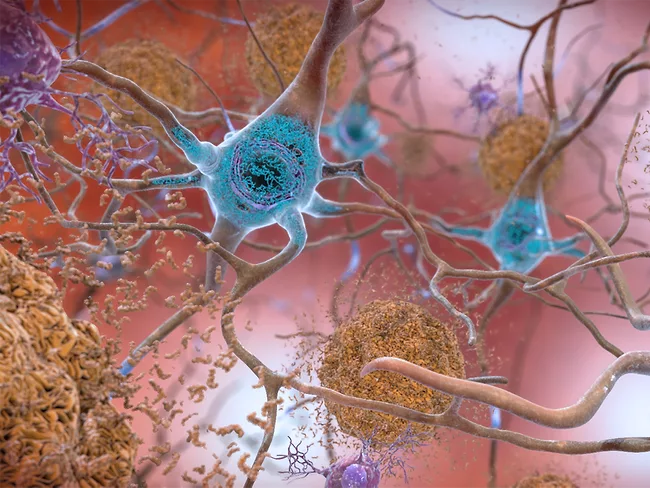
By creating a new mouse model of Alzheimer’s disease that better recapitulated how the disease plays out in humans, investigators at KU Leuven have gained new insights into how amyloid plaques, tau tangles and neuronal death are related at the molecular level.
Shanghai SIMR Biotech Co. Ltd. has developed imidazopyridazine derivatives acting as GABA-A modulators and reported to be useful for the treatment of pain, Alzheimer’s disease, multi-infarct dementia, epilepsy, pruritus and stroke.
Eisai R&D Management Co. Ltd., National Institutes for Quantum and Radiological Science and Technology (QST), Ono Pharmaceutical Co. Ltd. and Takeda Pharmaceutical Co. Ltd. have patented new radiolabeled compounds targeting α-synuclein (α-Syn, SNCA) and acting as optical imaging agents for the diagnosis of Lewy body dementia (DLB), multiple system atrophy and Parkinson’s disease.
Researchers from Binzhou Medical University and affiliated organizations have detailed the synthesis and optimization of a new series of 1,4,5,6-tetrahydrobenzo [2,3]oxepino[4,5-d]pyrimidin-2-amine derivatives, which resulted in the identification of compound [I] as the lead candidate with potent anti-neuroinflammatory activity in vitro.
The FDA has cleared an IND application for ADEL-Y01, being jointly developed by Oscotec Inc. and Adel Inc., for the treatment of Alzheimer’s disease. A phase Ia/b study will include healthy volunteers, and participants with mild cognitive impairment due to Alzheimer’s disease or mild Alzheimer’s disease.
Phoenix Pharmalabs Inc. has reported findings from in vivo studies that demonstrated that the company’s lead compound, PPL-138, reduced symptoms of post-traumatic stress disorder (PTSD) and decreased alcohol consumption in a rat model of PTSD/alcohol use disorder (AUD). The studies were conducted at the University of Oklahoma Health Sciences Center and Florida Atlantic University under a grant from the U.S. Department of Defense.
Sanofi SA has identified thienopyrrolotriazine compounds reported to be useful for the treatment of multiple system atrophy, frontotemporal dementia, multiple sclerosis, amyotrophic lateral sclerosis, brain injury, Alzheimer’s and Parkinson’s disease.
Nurexone Biologic Inc. has completed a pre-IND meeting with the FDA in connection with the manufacturing, preclinical and clinical development plan of Exopten. Exopten is being developed to be a minimally invasive Exotherapy product for spinal cord injuries given intranasally and yielding neuron regeneration and rewiring in traumatically damaged spinal cords.
Dewpoint Therapeutics Inc. and Chemify Ltd. have partnered to develop a suite of digitally discovered and automatically synthesized novel molecules on Chemify’s programmable chemistry platform against condensate targets of interest in Dewpoint’s oncology and neurodegeneration pipeline.