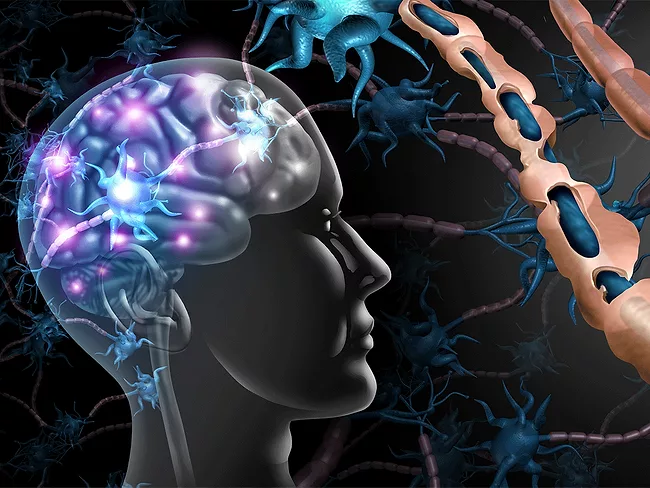
It was previously demonstrated that the CNS-penetrant compound bryostatin-1 (bryo-1) exerts an immunomodulatory effect on myeloid-lineage innate immune cells in the periphery through its actions on protein kinase C (PKC). In a new study, researchers from Johns Hopkins University aimed to assess the potential of bryo-1 for the treatment of progressive multiple sclerosis (MS) by investigating its effect on remyelination.
Therapies for multiple sclerosis (MS) have been effective in relapse prevention but emerging data still show the continued disability progression independent of relapse activity (PIRA), characterized by the presence of ectopic B-cell follicles and active lesions with microglia cells, resulting in a smoldering central nervous system (CNS)-driven inflammation, tissue damage and disease progression.
The use of anti-CD20 therapies has revolutionized treatment options for multiple sclerosis (MS) patients, reducing relapses and halting disease progression. While CD20 is primarily expressed by B cells at different stages, a small T-cell subset also expresses CD20, and therefore anti-CD20 therapies also directly and indirectly affect T cells.
Researchers at F. Hoffmann-La Roche Ltd. and Hoffmann-La Roche Inc. have described haloacethydrazide compounds acting as legumain (asparaginyl endopeptidase; LGMN; AEP) inhibitors reported to be useful for the treatment of subacute sclerosing panencephalitis, progressive supranuclear palsy, frontotemporal dementia and Alzheimer's disease, among others.
Louisiana State University has disclosed 5-HT2 receptor ligands reported to be useful for the treatment of anxiety, depression, asthma, chronic obstructive pulmonary disease (COPD), Alzheimer's disease, rheumatoid arthritis, chronic pain and post-stress traumatic disorder, among others.
Microglial cells (MGs) are resident immune cells in the brain, which play a key role in the acute response and chronic recovery to stroke. Investigators at the University of Texas Health Science Center Houston aimed to evaluate MG transcriptomic response to stroke in mouse brain.
PTC Therapeutics Inc. has synthesized heteroaryl compounds acting as huntingtin (HTT) (mutant) expression inhibitors reported to be useful for the treatment of Huntington's disease.
NRG Therapeutics Ltd. has been awarded a second US$500,000 grant from The Michael J. Fox Foundation for Parkinson's Research (MJFF), to support its lead drug discovery program and the development of a novel treatment for Parkinson's disease.
Neurocrine Biosciences Inc. has described new muscarinic M4 receptor antagonists reported to be useful for the treatment of tremor, dystonia and parkinsonism.

 RSS
RSS