In a recently published study, researchers from Taipei Medical University and collaborators have reported on their efforts to discover new DYRK1A-specific inhibitors.
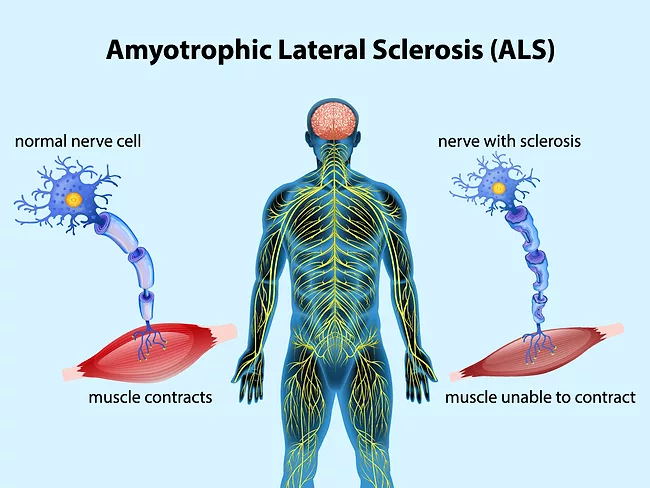
Dewpoint Therapeutics Inc. has entered into a strategic research collaboration with Mitsubishi Tanabe Pharma Corp. to advance Dewpoint’s novel small-molecule condensate modulator targeting TDP-43 for amyotrophic lateral sclerosis (ALS).
Arrakis Therapeutics Inc. has presented data on its RNA-targeted small-molecule (rSM) drug program for the treatment of myotonic dystrophy type 1 (DM1). The company’s proprietary RNA‐specific chemical, biological and structural methods and RNA-directed medicinal chemistry enabled structure-based small-molecule drug design targeting the trinucleotide (CUG) repeat expansion in the mRNA of DMPK (myotonic dystrophy protein kinase) that drives DM1 pathology.
A ketone body, a molecule derived from the metabolism of acids to obtain energy when glucose is not available, could become an effective ally in treating Alzheimer’s or preventing the effects of aging on the brain. A group of scientists at the Buck Institute for Research on Aging have studied the role of β-hydroxybutyrate (βHB) as a signaling metabolite of misfolded proteins by interacting with them and altering their solubility, a mechanism that allows their elimination, as observed in preclinical models.
Spur Therapeutics Ltd. has selected SPR-301 as lead development candidate from its gene therapy program for a genetically defined subset of Parkinson’s disease characterized by mutations in the GBA1 gene. The mutations cause a deficiency in the enzyme glucocerebrosidase (GCase), leading to the accumulation of α-synuclein and subsequent death of neuronal cells that are hallmarks of Parkinson’s disease.
Switch Therapeutics Inc. has announced its first development candidate, a liver-sparing APOE (apolipoprotein E) RNAi therapy for treatment of Alzheimer’s disease in APOE4 carriers. Switch’s conditionally activated siRNA (CASi)-APOE program is designed to knock down APOE in the CNS without affecting APOE in the liver, where it plays a vital role in systemic lipid homeostasis.
Researchers from Universita degli Studi di Pavia and Universita degli Studi di Torino have prepared and tested new boron-based compounds for the treatment of Alzheimer’s disease by capture-enhanced neutron irradiation (CENI).
Leal Therapeutics Inc. has divulged mitochondrial glutaminase kidney isoform (GLS, GLS1) inhibitors reported to be useful for the treatment of neurological and psychiatric disorders.

 RSS
RSS