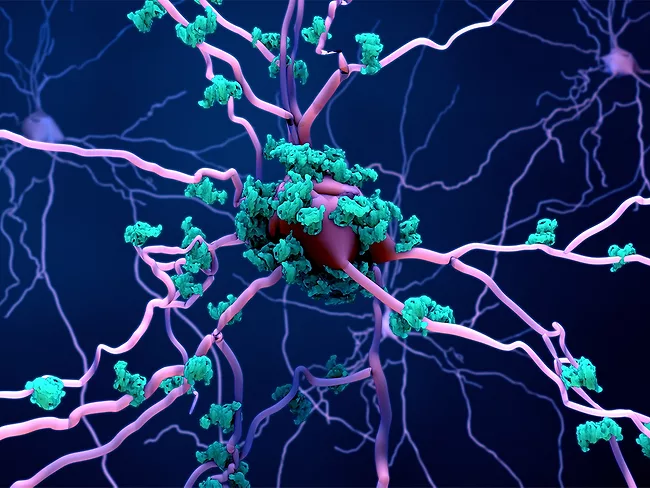
A ketone body, a molecule derived from the metabolism of acids to obtain energy when glucose is not available, could become an effective ally in treating Alzheimer’s or preventing the effects of aging on the brain. A group of scientists at the Buck Institute for Research on Aging have studied the role of β-hydroxybutyrate (βHB) as a signaling metabolite of misfolded proteins by interacting with them and altering their solubility, a mechanism that allows their elimination, as observed in preclinical models.
Spur Therapeutics Ltd. has selected SPR-301 as lead development candidate from its gene therapy program for a genetically defined subset of Parkinson’s disease characterized by mutations in the GBA1 gene. The mutations cause a deficiency in the enzyme glucocerebrosidase (GCase), leading to the accumulation of α-synuclein and subsequent death of neuronal cells that are hallmarks of Parkinson’s disease.
Switch Therapeutics Inc. has announced its first development candidate, a liver-sparing APOE (apolipoprotein E) RNAi therapy for treatment of Alzheimer’s disease in APOE4 carriers. Switch’s conditionally activated siRNA (CASi)-APOE program is designed to knock down APOE in the CNS without affecting APOE in the liver, where it plays a vital role in systemic lipid homeostasis.
Researchers from Universita degli Studi di Pavia and Universita degli Studi di Torino have prepared and tested new boron-based compounds for the treatment of Alzheimer’s disease by capture-enhanced neutron irradiation (CENI).
Leal Therapeutics Inc. has divulged mitochondrial glutaminase kidney isoform (GLS, GLS1) inhibitors reported to be useful for the treatment of neurological and psychiatric disorders.
Researchers at the University of Rochester have described a neuroimaging-based biomarker that could identify individuals with early psychosis, and improved their identification when it was added to a standard neurocognitive diagnostic test. In a group of roughly 160 participants in the Human Connectome Early Psychosis Project, individuals who were in the early stages of psychosis had stronger connections from the thalamus (a midbrain sensory processing area) to the cortex, but weaker connections between different cortical areas, than controls.
Our immune cells are not just “defenders” against deadly viruses and pathogens but also a great balancer for tissue homeostasis. For neurological disorders, understanding the neuro-immune axis could be key to treating previously untreatable conditions such as autism spectrum disorder, according to Jun R. Huh, professor of immunology at Harvard Medical School.
Icagen Inc. has disclosed potassium voltage-gated channel subfamily KQT member 2 (KCNQ2; Kv7.2) activators reported to be useful for the treatment of pain, Alzheimer’s disease, epilepsy, motor neuron disease, neurodevelopmental disorders, depression, tinnitus and attention deficit hyperactivity disorder, among others.
 RSS
RSS