In Duchenne muscular dystrophy (DMD), deficiency of dystrophin leads to cardiomyocyte membrane instability, abnormal calcium influx, and progressive fibrotic remodeling of cardiac tissue. Histone deacetylase 6 (HDAC6) contributes to disease progression by regulating cytoskeletal dynamics and proteostasis in dystrophic muscle cells. Consequently, inhibition of HDAC6 represents a potential therapeutic strategy for addressing both the skeletal and cardiac manifestations of DMD.
The exact genetic and epigenetic cause of the sporadic form of amyotrophic lateral sclerosis (ALS), which affects approximately 90% of patients, are largely unknown. Previous work found that mitochondrial dysfunction and metabolic dysregulation are crucial to ALS pathophysiology.
Similarities among three pediatric brain tumors that arise in different structures of the CNS – pineoblastoma, retinoblastoma and Group 3 medulloblastoma – have been linked to their shared origin during pineal gland development. Scientists at St. Jude Children’s Research Hospital have identified the molecular signatures that drive these tumors from pinealocyte progenitor cells that conserve a common differentiation program, providing a shared therapeutic target for these three cancer types.
Jiangxi Kerui Pharmaceutical Co. Ltd. has patented potassium voltage-gated channel subfamily KQT member 2/3 (KCNQ2/3) activators. They are reported to be useful for the treatment of anxiety disorders, depression, pain, focal seizures and tonic clonic epilepsy.
If one could sweep the brain clean and send the toxic substances that drive neurodegeneration to the recycling bin, perhaps one could treat Alzheimer’s disease (AD). Researchers at the Chinese Academy of Sciences propose a new therapeutic strategy that uses synthetic peptides that bind to amyloid-β (Aβ) and direct it toward lysosomes. In addition, researchers at the Washington University School of Medicine in St. Louis have genetically modified astrocytes in vivo to express chimeric antigen receptors (CARs) that recognize and phagocytose Aβ plaques.
Merck Sharp & Dohme LLC (MSD) has prepared and tested new positron emission tomography (PET) agents for binding and imaging α-synuclein (SNCA) for the diagnosis of Parkinson’s disease.
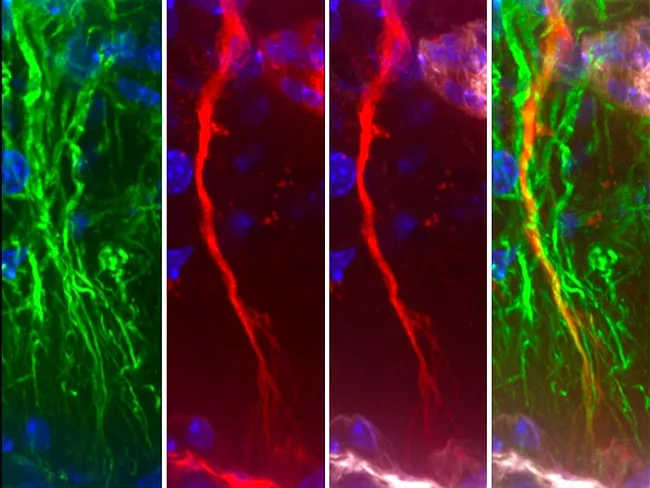
Researchers at INSERM and collaborators have identified hypothalamic tanycytes as mediators of tau clearance and shown that their structural and genetic disruption may drive Alzheimer’s disease (AD) pathology. AD is characterized by the buildup of extracellular amyloid-β plaques and intracellular tau tangles, protein aggregates that disrupt neuronal function and drive neurodegeneration.
Neurosterix Pharma Sarl has divulged 3-cyclopropylpyrazole derivatives acting as muscarinic M4 receptor positive allosteric modulators. They are reported to be useful for the treatment of psychiatric and neurological disorders.
Targeting the interaction between the C-terminal domain of the GluA2 subunit of AMPAR and brefeldin-resistant Arf-GEF 2 (BRAG2), a guanine nucleotide exchange factor for the small GTPase Arf6, presents a potential therapeutic approach for acute ischemic stroke.
A therapeutic strategy based on alternative splicing of the MECP2 gene could restore protein levels in Rett syndrome, a neurological disorder caused by mutations in that gene. Scientists at Baylor College of Medicine have successfully tested this approach both in vitro in neurons from Rett patients that produce some functional protein, correcting the altered gene expression and improving neuronal functions, and in vivo in mice.
 RSS
RSS