Genome sequencing has identified several single-nucleotide polymorphisms (SNPs) tied to osteoporosis, but most of them are located in noncoding regions. Investigators identified a SNP which impacted the YY2-PAPSS2 axis and risk of osteoporosis; the PAPSS2 gene encodes bifunctional 3’-phosphoadenosine 5’-phosphosulfate synthase 2.
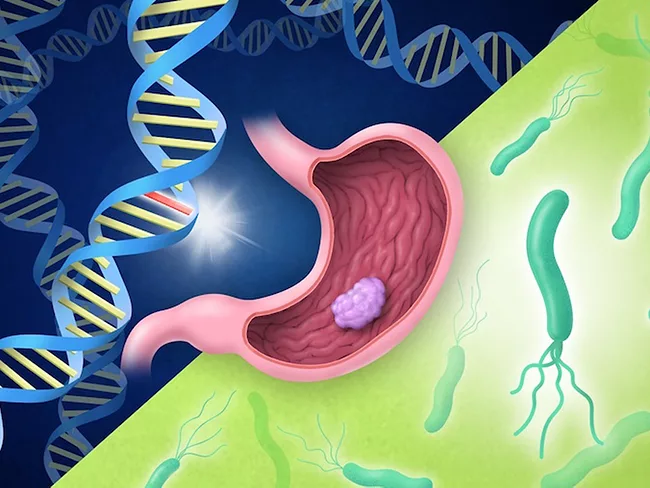
Infection with Helicobacter pylori is a risk factor for the development of gastric cancer. H. pylori initiates a chronic inflammatory response that can lead to the production of excessive radical oxygen species (ROS), which in turn can activate oncogenic signaling pathways leading to gastric cancer development. SUMOylation is a post-translational modification mechanism in cells in response to reactions to stress. A team at The First Affiliated Hospital of Nanchang University hence set out to study the role of SUMO-activating enzyme subunit 1 (SAE1) in gastric cancer, since it is a SUMO-activating effector protein.
It is known that CX3C chemokine receptor 1 (CX3CR1) expressed on macrophages plays a crucial role in inner hair cell ribbon synaptic repair and spiral ganglion neuron survival after synaptopathic noise-induced trauma.
Researchers from Broad Institute Inc. and affiliated organizations have reported data from a study that highlighted a new variant-to-gene-to-program (V2G2P) approach designed to link variants from genome-wide association studies (GWAS) to genes and identify their convergence onto specific disease-associated transcriptional programs.
Bleeding of unknown cause is a group of rare disorders that are still difficult to accurately diagnose. A case report on a patient with hematoma in the perineal region after her first delivery was presented.
The rare hereditary fibrinogen disorder hypodysfibrinogenemia is characterized by fibrinogen defects, which can cause thrombotic and hemorrhagic phenotypes that are not always predicted by routine coagulation tests. Researchers from Academic Hospital Maastricht aimed to characterize the genetic profile of a family with hypodysfibrinogenemia and predict bleeding and/or thrombotic phenotypes in asymptomatic family members using innovative testing.
Bleeding of unknown cause (BUC) is a diagnosis of exclusion, and it is common for these patients to have congenital platelet function disorders. Whole-exome sequencing may help reach a more accurate diagnosis in these cases.
Researchers from China Medical University (Taiwan) and affiliated organizations have published results from a study that aimed to identify generic variants within the phosphoinositide 3-kinase (PI3K)/AKT signaling pathway that could represent novel biomarkers in patients with prostate cancer.
Second Affiliated Hospital of Wenzhou Medical University investigators have assessed the functions of FBXO28 on proliferation, migration and invasion in ovarian cancer.
 RSS
RSS