Arrepath Inc. has patented new UDP-2,3-diacylglucosamine hydrolase (LpxH) (bacterial) inhibitors reported to be useful for the treatment of gram-negative bacterial infections.
Researchers from Osaka University have developed a novel approach to target nicotinamide N-methyltransferase (NNMT), an enzyme implicated in cancer progression, using antisense oligonucleotides (ASOs).
Traditional neoantigen prediction methods primarily rely on HLA-peptide binding databases, often producing false positives. This challenge highlights the need for improved strategies to identify truly immunogenic neoantigens. Neoantigen-based cancer vaccines have shown promising efficacy in recent clinical trials for treating solid tumors, offering a potential solution.
Both IL-15 and IL-2 are good options for cancer therapy, but IL-15 is considered superior due to lower vascular endothelial toxicity, stronger ability to expand natural killer and CD8+ T cells and weaker stimulation of T regulatory cells, but it has a short half-life and exerts severe adverse effects.
Researchers at Jilin University and collaborators combed through data in the public Cancer Genome Atlas and identified a potential target for lung adenocarcinoma.
KAT6A and its paralogue KAT6B are histone acetyltransferases whose overexpression is linked to poor prognosis in ER+/HER2- breast cancer and other types of tumors.
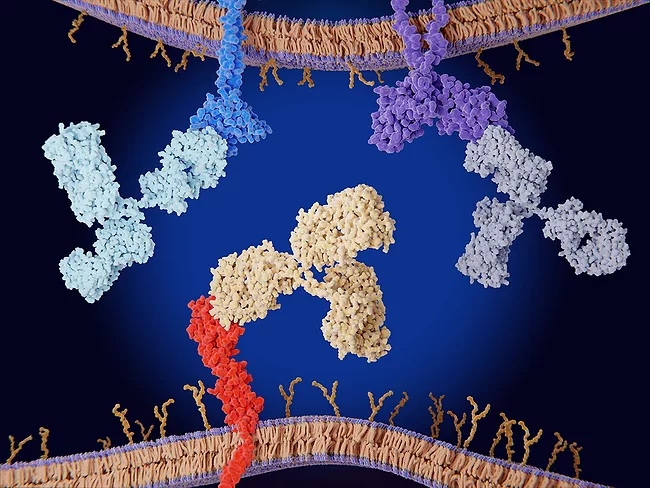
A recent study explored the therapeutic potential of hu128.1, a humanized antibody targeting transferrin receptor 1 (TfR1), in treating erythroleukemia using xenograft mouse models. The results demonstrate that hu128.1 exerts strong antitumor activity against human erythroleukemic (ERY-1) cells, highlighting its promise as a candidate for managing this aggressive cancer.
Indivior plc has successfully advanced its GABA-B positive allosteric modulator (PAM) program for substance use disorders through IND-enabling studies with the completion of the last preclinical safety and toxicity studies.
Kymera Therapeutics Inc. has announced a new oral IRF5 degrader program with potential to treat immuno-inflammatory diseases, such as lupus, Sjögren’s syndrome, rheumatoid arthritis and inflammatory bowel disease.
Beijing QL Biopharmaceutical Co. Ltd. has presented preclinical data on their GLP-1/GDF15 dual agonist QL-1005 for the potential treatment of inflammation and fibrosis in murine models of metabolic dysfunction-associated steatohepatitis (MASH) and chemically induced liver fibrosis.

 RSS
RSS