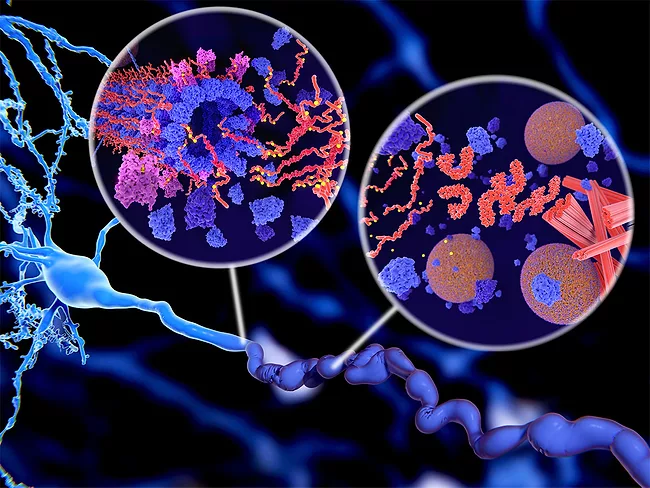
Enigma Biomedical USA Inc. has selected two four-repeat tau (4R tau) protein PET imaging biomarkers to advance into phase I studies. These imaging biomarkers show promise as important new tools in advancing understanding of neurodegenerative diseases in which the misfolded 4R tau protein is implicated.
Mosaic variegated aneuploidy syndrome (MVAS) is an autosomal recessive disorder characterized by mosaic aneuploidy. Its clinical manifestations include growth and developmental delay, congenital malformations and increased cancer risk. Genetic variants involved in MVAS affect the chromosomal segregation during mitosis, where individuals often show mosaicism and chromosomal instability.
The first complete DNA methylation atlas of 39 human cell types reveals which genes can talk or are silenced, depending on whether their sequence is linked to methyl group epigenetic modification that regulates their expression. This map of on-and-off switches shows differences between the alleles inherited from the father and those from the mother, providing a view of gene expression that can be explored in health and disease independently of the information contained in the DNA sequence.
Axcynsis Therapeutics Pte Ltd. has described antibody-drug conjugates comprising an antibody or antigen-binding fragment targeting alkaline phosphatase placental type (ALPP) and/or alkaline phosphatase, germ cell type (ALPPL2) covalently linked to a cytotoxic agent through a linker reported to be useful for the treatment of cancer.
Jiangsu Hengrui Medicine Co. Ltd. and Shanghai Hengrui Pharmaceutical Co. Ltd. have disclosed Toll-like receptor 7 (TLR7) and/or TLR8 and/or TLR9 antagonists reported to be useful for the treatment of rheumatoid arthritis, multiple sclerosis, systemic lupus erythematosus and Sjögren’s syndrome.
Allogenica SAS has been awarded a €2.5 million (US$2.7 million) grant under the French government’s France 2030 program to help advance its universal CAR T candidate, XL-001, for CD19-positive hematologic cancers.
Atopic dermatitis (AD) is mainly triggered by immune dysregulation, barrier dysfunction and inflammation propagation, and chronic itching increases the susceptibility to infections.
 RSS
RSS