RTI International has divulged vancomycin derivatives with siderophore modification reported to be useful for the treatment of gram-negative and gram-positive bacterial infections.
Nutshell Biotech (Shanghai) Co. Ltd. has identified nitrogen-containing macrocyclic compounds acting as DNA polymerase θ (POLθ) inhibitors reported to be useful for the treatment of cancer.
Scientists at CeMM-Forschungsinstitut für Molekulare Medizin GmbH and Max Planck Society for the Advancement of Science EV have synthesized proteolysis targeting chimera (PROTAC) compounds comprising a DDB1- and CUL4-associated factor 11 (DCAF11) binding moiety covalently linked to a different protein targeting moiety through a linker.
It has been previously demonstrated that intranasal treatment with COG-201, an AAV9-shRNA designed to target the down-regulation of the 5-HT2A receptor, significantly decreased anxiety and improved memory in mice and rats.
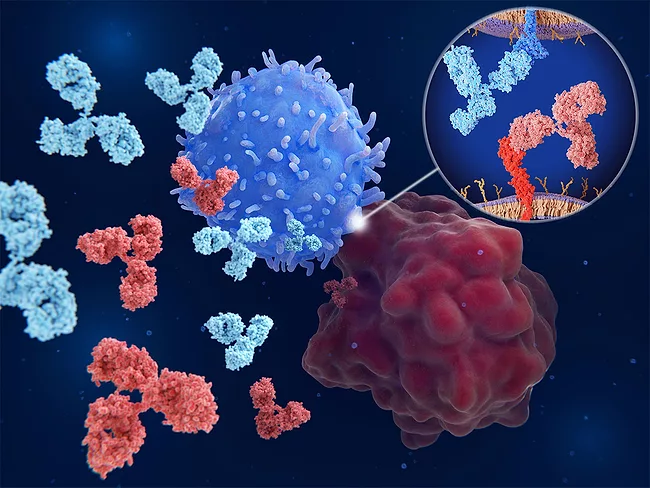
Immune checkpoint inhibitors targeting the PD-1/PD-L1 pathway are widely used in cancer immunotherapy, but poor tissue distribution or immune-related adverse events often limit their application.
The signaling of TNF receptor (TNFR) superfamily member 4 (OX40) and its ligand (OX40L) plays a crucial role in the development of immunological and inflammatory disorders due to triggering a subset of T-cell responses.
As in other muco-obstructive diseases, the airways in cystic fibrosis (CF) are characterized by goblet cell and glandular hyperplasia, with overproduction of mucins MUC5 and MUC5AC, resulting in viscous mucus, respiratory blockade and recurrent infections and inflammation.
At this week’s American Society for Radiation Oncology meeting, scientists from The University of Texas MD Anderson Cancer Center reported the discovery and preclinical evaluation of CD47-LLO, a novel microbial-inspired antibody-drug conjugate (ADC) for the treatment of cancer.
Gigagen Inc., a subsidiary of Grifols SA, has been awarded a contract by the U.S. Biomedical Advanced Research and Development Authority (BARDA) to develop a recombinant polyclonal antibody therapy for botulinum neurotoxins and a second biothreat of interest yet to be determined.

 RSS
RSS