Aatec Medical GmbH has announced the start of its collaboration with the German Federal Agency for Disruptive Innovations (SPRIND), which will help advance the preclinical development of ATL-105.
At the ongoing WORLDSymposium meeting in San Diego, Gain Therapeutics Inc. presented preclinical data on the company’s GCase enhancer GT-02287 as a potential approach to rescue motor function in Parkinson’s disease (PD).
Aquaporins (AQPs) are membrane proteins distributed over different organs and tissues that facilitate the interchange of water or solutes across membranes. One of these AQPs, named AQP7, has been shown to regulate signaling responses to cellular stress in breast cancer, and is hence considered a therapeutic target in cancer treatment.
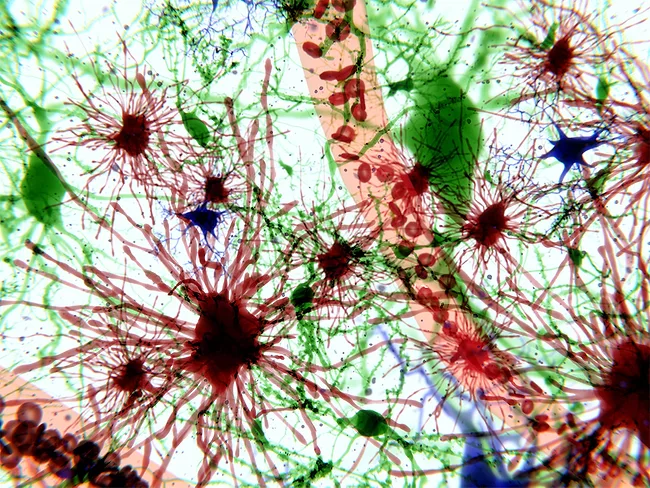
Researchers at Kanazawa University, Japan, have reported a mixed-glial culture on/in soft substrate (MGS) platform to investigate cancer-glia interactions in vitro. Using this model, they showed that astrocytes favored brain metastasis by promoting metabotropic glutamate mGlu1 receptor (mGluR1) expression in cancer cells and stabilizing EGFR. Eishu Hirata, an associate professor at the Cancer Research Institute, Division of Tumor Cell Biology and Bioimaging at Kanazawa University, and his team
published their work on Feb. 2, 2024, in Developmental Cell.
Chiesi Farmaceutici SpA has prepared azetidine derivatives acting as cathepsin C (dipeptidyl peptidase 1, DPP-1) inhibitors and reported to be useful for the treatment of non-cystic fibrosis bronchiectasis (NCFBE), among others.
Dong-A ST Co. Ltd. has reported new eukaryotic translation initiation factor 2α kinase 4 (GCN2) inhibitors as potentially useful for the treatment of cancer, infections, neurodegenerative and metabolic diseases.
NLRP3 inflammasome inhibitors have been disclosed in a Kodiak Sciences Inc. patent and described as useful for the treatment of atherosclerosis, gout, rheumatoid arthritis, inflammatory bowel, Alzheimer’s, Parkinson diseases, multiple sclerosis and glaucoma.
Aligos Therapeutics Inc. and Katholieke Universiteit Leuven have jointly patented 3C-like proteinase (3CLpro; Mpro; nsp5) (SARS-CoV-2; COVID-19 virus) inhibitors for the treatment of SARS-CoV-2 infection (COVID-19), middle East respiratory syndrome coronavirus (MERS-CoV) infection, norovirus and rhinovirus infections.
 RSS
RSS