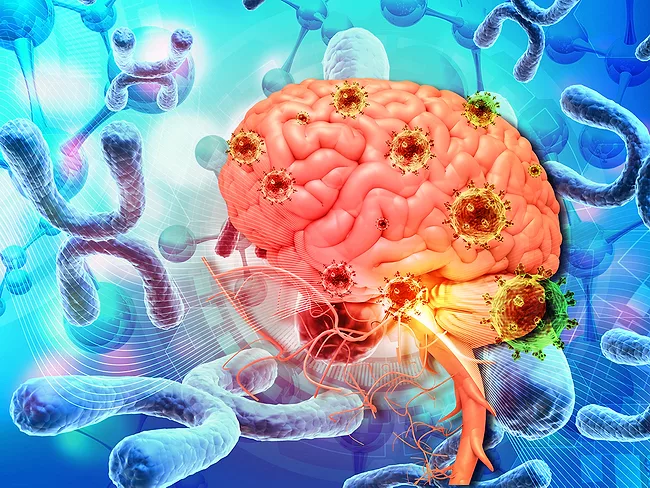
Antiretroviral therapies against HIV have been in use for more than 30 years and have enabled people living with HIV to maintain undetectable viral levels. Many of them are aging in good health. However, others present symptoms of cognitive decline. HIV can reach the brain and establish a reservoir there. Yet, it is still unknown what this reservoir is like, which cells are affected, and which comorbidities are typical of aging or are associated with the virus.
Newco Vesalic Ltd. has formed to take forward research indicating extracellular vesicles secreted by skeletal muscle cells carry toxic payloads that are key drivers of motor neuron diseases, including amyotrophic lateral sclerosis. The discovery of this process, which is largely external to the brain and the central nervous system, has opened up new targeting possibilities, and Vesalic is now working on in vivo studies to demonstrate preclinical proof of concept.
Insilico Medicine Inc. has identified new glucagon-like peptide 1 receptor (GLP-1R) agonists potentially useful for the treatment of atherosclerosis, coronary heart diseases, dementia, diabetes, hypertension, obesity, hyperlipidemia and cerebral infarction.
Haisco Pharmaceutical Group Co. Ltd. has synthesized new cyclic peptides acting as interleukin-23 receptor (IL-23R) antagonists potentially useful for the treatment of inflammatory bowel disease and psoriasis.
Augustine Therapeutics NV has divulged thiomethyl carbonyl compounds acting as histone deacetylase 6 (HDAC6) and/or HDAC1 and/or HDAC3 inhibitors. They are reported to be useful for the treatment of inflammatory disorders, autoimmune disease, cancer, neurodegeneration, pain, neuropathy, psychiatric and cardiovascular disorders.
Shanghai Aryl Pharmtech Co. Ltd. and Zhejiang Hisun Pharmaceutical Co. Ltd. have jointly patented new potassium voltage-gated channel subfamily A member 3 (KCNA3; Kv1.3) blockers for use in the treatment of autoimmune diseases.
Asieris Pharmaceuticals Co. Ltd. and Shanghai Yahong Meditech Co. Ltd. have discovered new poly(ADP-ribose) glycohydrolase (PARG) inhibitors potentially useful for the treatment of cancer.
Researchers from Jiangsu Ocean University reported the synthesis and preclinical evaluation of novel derivatives of SKF-83566, a selective D1 receptor antagonist widely used in dopamine signaling research.
Tessera Therapeutics Inc.’s lead in vivo gene editing program, TSRA-196, has been awarded orphan drug and fast track designations by the FDA for adults with α-1 antitrypsin deficiency (AATD).
Researchers from Shanghai Ailux Biotechnology Co. Ltd. have disclosed preclinical data regarding their humanized bispecific antibody ALX-001 targeting TL1A and IL-23 for the potential treatment of immune-mediated inflammatory diseases (IMIDs).
 RSS
RSS