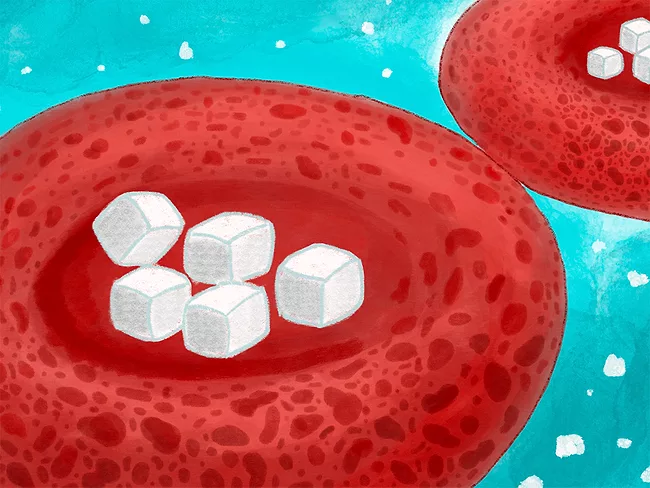
On the average, humans – and pigs, and deer, and birds – who live at high altitudes have better blood glucose control than their counterparts near sea level. In work published in the Feb. 19, 2026, issue of Cell Metabolism, investigators have linked this phenomenon to red blood cells that directly take up and metabolize glucose from the blood under low oxygen conditions.
Shanghai SIMR Biotech Co. Ltd. has prepared and tested new GABA-A receptor subunit α5 (GABRA5) inverse agonists. They are reported to be useful for the treatment of pain, stroke and Alzheimer’s disease.
Tarapeutics Science Inc. has reported new pyrazolopyridine compounds acting as dual specificity protein kinase CLK and dual specificity tyrosine-phosphorylation-regulated kinase (DYRK) inhibitors.
East China Normal University and Fudan University have jointly discovered tricyclic pyrimidine compounds acting as adenosine A2A and/or A2B receptor antagonists.
Jiangsu Hengrui Pharmaceuticals Co. Ltd. and Shanghai Hengrui Pharmaceutical Co. Ltd. have identified new proteolysis targeting chimera (PROTACs) compounds comprising an E3 ubiquitin ligase-binding moiety coupled to a B-cell lymphoma 6 protein (BCL6)-targeting moiety through a linker.
Mutations in GTPase KRAS, concretely KRAS G12D, are predominant in pancreatic and colorectal cancers and targeting them is still a challenge. Researchers have published results from studies of a new KRAS G12D inhibitor, LPM-5140276, for the potential treatment of these cancer types harboring this mutation.
Nonprofit Finding Hope for Frizzle (FRRS1L) and Apertura Gene Therapy have signed a license agreement for the development of a gene therapy for FRRS1L disease, also known as early infantile epileptic encephalopathy type 37, using Apertura’s CNS-targeting TfR1 CapX AAV capsid.
Researchers from University College London and collaborating institutions have recently published results from their study aiming to optimize gene therapy for CLN5 disease.
 RSS
RSS