Artificial intelligence tools are springing up at multiple points along drug discovery and development, but despite the hype, as yet there is minimal return on investment (ROI). “I would say a lot of companies sort of get this big excitement about AI, but then when you look at how much ROI they get, it’s actually very little. And that’s because the workflow and the process, end-to-end, isn’t mapped to really understand where AI can truly make an impact,” said Laura Matz, chief science and technology officer at Merck KGaA.
Minimal residual disease (MRD) has become a central concept in modern oncology, reshaping how clinicians evaluate response, relapse risk and treatment precision. As increasingly sensitive technologies reveal traces of cancer that persist after therapy, MRD is emerging as both a biological challenge and a clinical opportunity, especially as new data illuminate its complexity across hematologic and solid tumors. This topic was addressed at the 2026 American Association for Cancer Research (AACR) annual meeting.
New Approach Methodologies (NAMs) for drug development are transforming biomedical research by replacing or complementing animal models. More than 90% of experimental compounds fail in clinical trials, underscoring the need for strategies that better capture human biology. Many of these techniques were showcased at the 2026 American Association for Cancer Research (AACR) annual meeting.
Flagship Pioneering Inc. has announced the launch of Serif Biomedicines Inc., a biotechnology company pioneering modified DNA as a new class of medicines. Modified DNA brings together the best features of mRNA and gene therapy, while mitigating their limitations, by enabling medicines that are programmable, scalable, durable and redosable.
A new metasurface design strategy that replaces rigid order with “engineered disorder” could significantly increase how many optical functions can be integrated into a single ultra-thin device without increasing size or complexity, according to a study published in Nature Communications. The study challenges a longstanding assumption in optical engineering that highly ordered, periodic structures are required to precisely control light.
When a tumor migrates and colonizes another tissue or organ, it can be identified as a metastasis, but its origin is not always clear. Now, a study based on machine learning has identified DNA-methylation patterns that reveal the type of tissue a cancer comes from when the primary tumor cannot be found. This technique could help guide more specific treatments for patients with cancers of unknown primary, who today often receive broad, nontargeted chemotherapy.
A new metasurface design strategy that replaces rigid order with “engineered disorder” could significantly increase how many optical functions can be integrated into a single ultra-thin device without increasing size or complexity, according to a study published in Nature Communications. The study challenges a longstanding assumption in optical engineering that highly ordered, periodic structures are required to precisely control light.
The U.S. FDA’s latest draft guidance on gene therapies focuses on nonclinical studies using next-generation sequencing-based methods and bioinformatics to evaluate safety risks associated with off-target editing and loss of genome integrity in human gene-edited products.
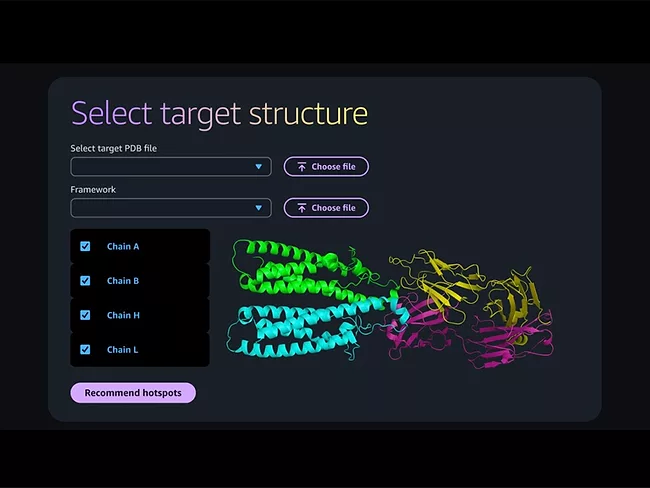
Amazon is extending the reach of its “everything store” into drug R&D with the launch of an artificial intelligence-powered Bio Discovery business. The company has compiled a catalogue of 40-plus foundation models that have been trained on extensive biology datasets and are able to generate and evaluate drug molecules in silico. For now, this covers antibodies only, but it is intended to move into other modalities.
Vivatides Therapeutics Inc. has closed an oversubscribed $54 million series A financing to advance its work in extrahepatic RNA delivery technologies. Proceeds from the financing will be used to further advance the company’s extrahepatic delivery platform and accelerate pipeline programs.

 RSS
RSS