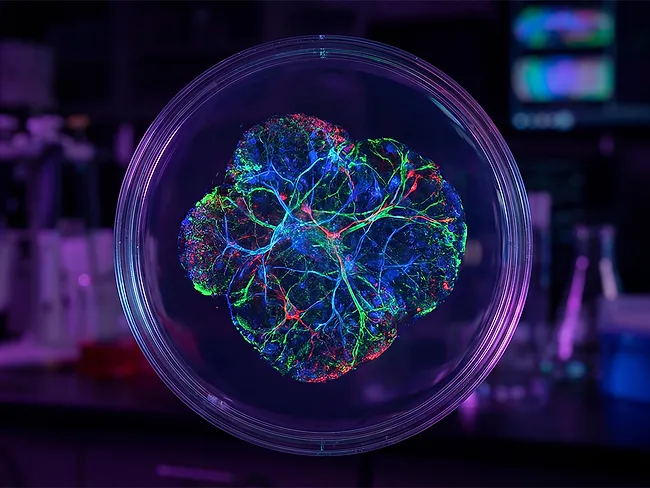
At the 2026 World Congress of Neuropsychopharmacology (CINP), held in Glasgow June 26-29, 2026, researchers from Japan’s National Center of Neurology and Psychiatry (NCNP) showcased how human organoid technologies are reshaping the study of neurodevelopmental vulnerability, addiction and psychiatric disorders.
Amyotrophic lateral sclerosis (ALS)-associated genes provide direct therapeutic targets and reveal pathways that can be used to develop treatments that counteract their harmful molecular effects. Because the underlying causes of most ALS cases remain unknown, identifying disease-associated variants is essential to uncover the mechanisms that drive the disease, as shown at the European Network to Cure ALS (ENCALS) meeting, held in Madrid from June 24 to 26, 2026.
Deficiencies of the enzyme β-N-acetylhexosaminidase (Hex) cause rare, autosomal recessive, fatal, neurodegenerative lysosomal storage disorders called GM2 gangliosidoses, including Tay-Sachs disease (TSD) and Sandhoff disease. Hex enzyme is a heterodimer encoded by HEXA (α subunit) and HEXB (β subunit), whose mutations result in TSD and Sandhoff disease, respectively.
Retinitis pigmentosa (RP) is an inherited retinal dystrophy that causes loss of vision. Pathogenic variants in proteins involved in RNA splicing are the second most common cause of autosomal dominant RP, with mutations in PRPF31 being the most prevalent. Additionally, mutations in spliceosomal small nuclear RNAs (snRNAs) U4 and U6 have recently been linked to RP.
Prime Medicine Inc. has obtained clearance from the New Zealand authority, Medsafe, for the company’s clinical trial application for PM-577a, an investigational Prime Editor for Wilson’s disease.
Constantiam Biosciences Inc. and Cincinnati Children’s have established a strategic collaboration, through an exclusive option for future licensing rights, to advance first-in-class small-molecule treatments for neuronopathic Gaucher disease (types 2 and 3).
Saniona AB has presented preclinical data and its clinical development strategy for its lead clinical candidate, SAN-2668, which is a GABA-A receptor positive allosteric modulator under development for the treatment of severe pediatric epilepsies.
Beam Therapeutics Inc. has obtained IND clearance from the FDA for BEAM-304 for the treatment of phenylketonuria (PKU). BEAM-304 is a liver-targeting lipid-nanoparticle (LNP) formulation of base editing reagents designed to correct mutations in the phenylalanine hydroxylase (PAH) gene that cause PKU.
 RSS
RSS