The switch will be flicked today to make the world’s largest dementia-related proteomics dataset freely available to researchers, at the same time as members of the consortium which compiled it publish the proteomics signatures of major neurodegenerative diseases that they uncovered in a first trawl of the data.
Cochlear Ltd. heard good news from the U.S. FDA, as the agency approved its next-generation cochlear implant, the Nucleus Nexa System, the first smart cochlear implant system. Cochlear expects to launch the new products in the U.S. in the next few months, Brendan Murray, vice president for Cochlear Implant products portfolio and strategy told BioWorld.
The variety of blood cells decreases with age. Some are lost, while others become dominant, leading to a loss of functional diversity. This, in turn, weakens the immune system in older individuals and increases the risk of developing hematological diseases. Scientists in Barcelona have developed a method based on DNA methylation that works like a barcode. EPI-Clone identifies and traces the origin of blood cells to measure the complexity of these clones in aging humans and mice.
“Just simply getting old, from age 50 to 75, increased risk for Alzheimer’s disease by 100-fold, which really dwarfed 10-fold increase in risk, conferred by all known risk factors combined, including APOE genotype, being a female, hypertension, smoking, physical inactivity and diabetes.
The first disease modifying therapies for Alzheimer’s may have limited utility in some senses, but they will be a force for change, providing momentum and altering the way governments as payers, and health systems as carers, think about the disease.
Samsung Life Science Fund made its first strategic investment of the year into C2N Diagnostics LLC, underscoring the rising potential of blood-based diagnostics in detecting and monitoring the risk of Alzheimer’s disease for the masses.
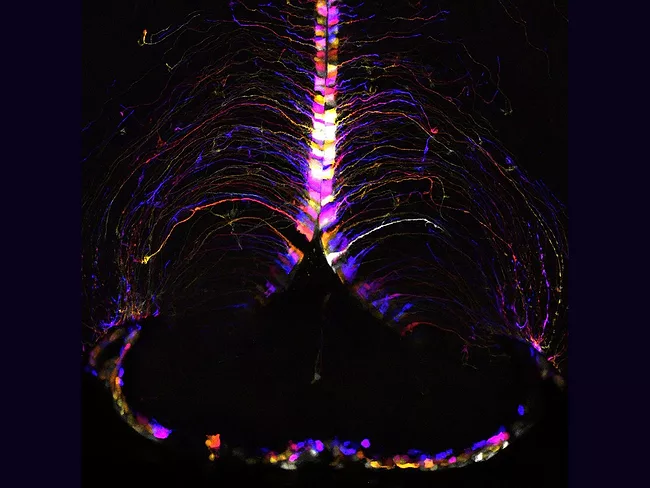
2024 saw the completion of several cellular-resolution brain maps, including the entire fly brain and a comprehensive connections map of a cubic centimeter of human brain. 2025 began with the addition of another important map. In the Jan. 1, 2025, issue of Nature, researchers from the Allen Institute presented a map of areas and cell types where aging most affected the mouse brain.
2024 saw the completion of several cellular-resolution brain maps, including the entire fly brain and a comprehensive connections map of a cubic centimeter of human brain. 2025 began with the addition of another important map. In the Jan. 1, 2025, issue of Nature, researchers from the Allen Institute presented a map of areas and cell types where aging most affected the mouse brain.
On the heels of U.S. FDA approval for Neurophet Aqua, an updated version of its artificial intelligence (AI)-based magnetic resonance imaging analysis software for the brain, Neurophet Inc. is preparing for an IPO in 2025 and expansion into U.S. and European markets.
Radiopharmaceutical biotech and contract development and organization firm Duchembio Co. Ltd. filed a securities report to South Korea’s Financial Services Commission Nov. 11, kickstarting the IPO process to list on the Korea Exchange.
 RSS
RSS