Around the end of every year, the media reports on pregnancy and women who give birth on the last and first days of the new year. They tell their stories, the names of their babies and the cities where they were born. While 2024 was coming to an end, gynecologists and other researchers finalized their publications to improve the health of women and their babies. The formation of the placenta or the study of preeclampsia are some of the first and last stories that greet and say goodbye to 2024. Those of 2025 will be born soon.
Hervolution Therapeutics ApS (formerly Inprother Aps) has announced a $11.7 million series A financing to support its work developing novel human endogenous retrovirus (HERV)-targeted immunotherapies to address diseases of aging.
Its lead program might have hit a safety snag, but Bioage Labs Inc.’s longevity data platform caught the attention of Novartis AG, which agreed to pay $20 million up front in a collaboration to identify drug targets for aging-related diseases. Taking into account potential long-term research, development and commercial milestones, the agreement could bring in up to an additional $530 million.
A ketone body, a molecule derived from the metabolism of acids to obtain energy when glucose is not available, could become an effective ally in treating Alzheimer’s or preventing the effects of aging on the brain. A group of scientists at the Buck Institute for Research on Aging have studied the role of β-hydroxybutyrate as a signaling metabolite of misfolded proteins by interacting with them and altering their solubility, a mechanism that allows their elimination, as observed in preclinical models.
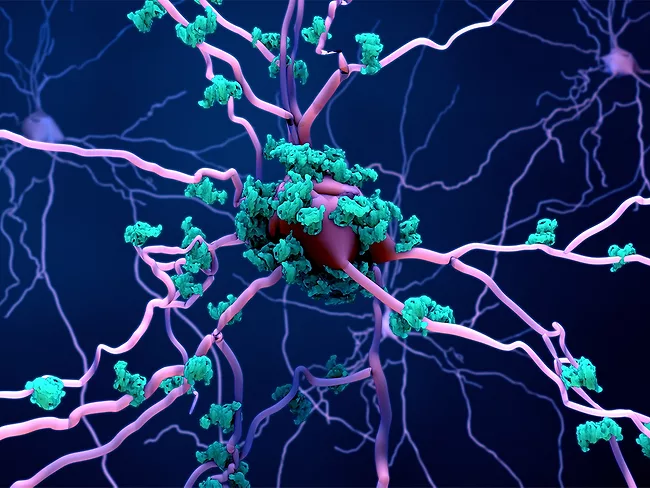
A ketone body, a molecule derived from the metabolism of acids to obtain energy when glucose is not available, could become an effective ally in treating Alzheimer’s or preventing the effects of aging on the brain. A group of scientists at the Buck Institute for Research on Aging have studied the role of β-hydroxybutyrate (βHB) as a signaling metabolite of misfolded proteins by interacting with them and altering their solubility, a mechanism that allows their elimination, as observed in preclinical models.
On the heels of U.S. FDA approval for Neurophet Aqua, an updated version of its artificial intelligence (AI)-based magnetic resonance imaging analysis software for the brain, Neurophet Inc. is preparing for an IPO in 2025 and expansion into U.S. and European markets.
Telomir Pharmaceuticals Inc. has reported preclinical results from evaluation of Telomir-1 in Caenorhabditis elegans, a well-established model for aging studies. Telomir-1 is a novel small molecule designed to lengthen the DNA’s protective telomere caps, which are crucial in the aging process.
EA Pharma Co. Ltd. has described 2-amino-3-carboxymuconate-6-semialdehyde decarboxylase (ACMSD) inhibitors reported to be useful for the treatment of age-related issues, as well as inflammatory, metabolic, neurodegenerative, mitochondrial and renal diseases.
Radiopharmaceutical biotech and contract development and organization firm Duchembio Co. Ltd. filed a securities report to South Korea’s Financial Services Commission Nov. 11, kickstarting the IPO process to list on the Korea Exchange.
Radiopharmaceutical biotech and contract development and organization firm Duchembio Co. Ltd. filed a securities report to South Korea’s Financial Services Commission Nov. 11, kickstarting the IPO process to list on the Korea Exchange.
 RSS
RSS