Parkinson’s disease (PD) involves the progressive loss of dopaminergic neurons, particularly in the substantia nigra. This neurodegeneration is linked to the abnormal accumulation of α-synuclein, a protein that forms toxic aggregates and spreads between cells, damaging them. At the 20th International Conference on Alzheimer’s and Parkinson’s Diseases (AD/PD), held from March 17 to 21, 2026, in Copenhagen, several strategies were presented that aim to modify the course of the disease and offer real alternatives to purely symptomatic treatments.
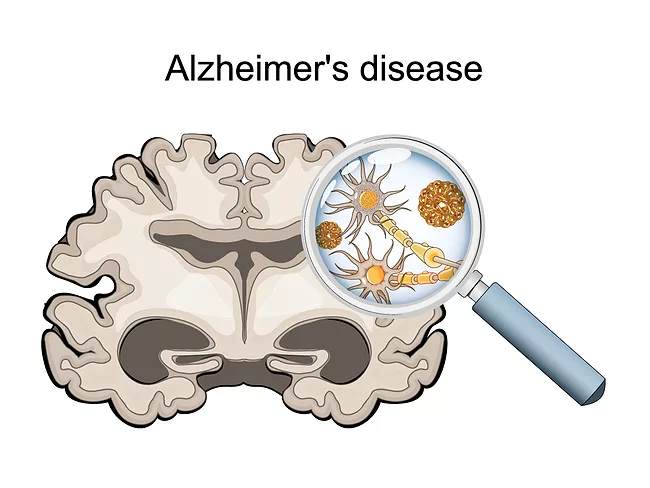
A new way of understanding Alzheimer’s disease, based on biological inflection points that mark decisive moments in the progression of the disorder, could change how new drugs are developed to achieve more effective therapies. This new perspective could rethink strategies that depend not so much on the target itself, but on the precise moment at which it is addressed.
A new way of understanding Alzheimer’s disease, based on biological inflection points that mark decisive moments in the progression of the disorder, could change how new drugs are developed to achieve more effective therapies. This new perspective could rethink strategies that depend not so much on the target itself, but on the precise moment at which it is addressed.
Neurodegenerative disease and cognitive decline cannot be explained by a single process. Beta-amyloid plaques, hyperphosphorylated tau, alpha-synuclein, activated microglia and astrocytes, altered receptors such as TREM2, mitochondrial dysfunction, epigenetic changes and cerebrovascular alterations all seem to contribute to the development of dementia in Alzheimer’s disease (AD). While scientists attempt to address each of these elements, prevention is growing as a primary goal.
Two biotech and three med-tech companies are slated for Kosdaq debuts this month, signaling a potential rebound for Korea financings in 2026. Kanaph Therapeutics Inc. will open with a ₩40 billion (US$26.99 million) raise and Imbiologics Corp. will debut with ₩52 billion. Additionally, Mezoo Co. Ltd., Cosmo Robotics Co. Ltd. and Recensmedical Inc. will launch IPOs.
Two biotech and three med-tech companies are slated for Kosdaq debuts this month, signaling a potential rebound for Korea financings in 2026. Kanaph Therapeutics Inc. will open with a ₩40 billion (US$26.99 million) raise and Imbiologics Corp. will debut with ₩52 billion. Additionally, Mezoo Co. Ltd., Cosmo Robotics Co. Ltd. and Recensmedical Inc. will launch IPOs.
The K-health MIRAE Initiative, also known as Korean ARPA-H, announced plans to allocate about ₩162 billion (US$110 million) in nine new projects over the next five years, with a focus on strengthening national health security.
Taiwan plans to invest NT$24 billion (US$752 million) over four years to bolster national biosecurity, expand domestic pharmaceutical production and safeguard against global supply chain volatility.
If one could sweep the brain clean and send the toxic substances that drive neurodegeneration to the recycling bin, perhaps one could treat Alzheimer’s disease. Researchers at the Chinese Academy of Sciences propose a new therapeutic strategy that uses synthetic peptides that bind to amyloid-β (Aβ) and direct it toward lysosomes. In addition, researchers at the Washington University School of Medicine in St. Louis have genetically modified astrocytes in vivo to express chimeric antigen receptors (CARs) that recognize and phagocytose Aβ plaques.
Taiwan plans to invest NT$24 billion (US$752 million) over four years to bolster national biosecurity, expand domestic pharmaceutical production and safeguard against global supply chain volatility.
 RSS
RSS