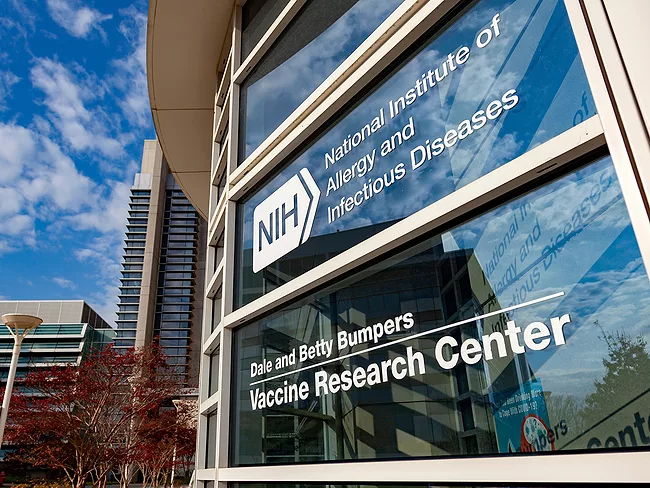
Billing it as a necessary reform to protect tax dollars from frivolous government spending, redundancy and waste, U.S. President Donald Trump issued a new executive order (EO) requiring his political appointees to sign off on grants and awards from agencies such as the NIH and to monitor those awards over time to ensure they’re being used properly.
Location, location, location. While location is as important in manufacturing as it is in buying a home, it could become even more so for drug companies when, and if, the global biopharma sector tariff U.S. President Donald Trump continues to tease becomes a reality. In the shadow of the impending tariff, the FDA is working on a draft framework, the two-phase FDA PreCheck, to make it faster and easier for biopharma companies to relocate their manufacturing to the U.S.
The U.S. Department of Health and Human Services has tapped Sean Keveney for the job of FDA chief counsel, but the recent history of the position muddies the waters when it comes to HHS oversight of FDA legal affairs.
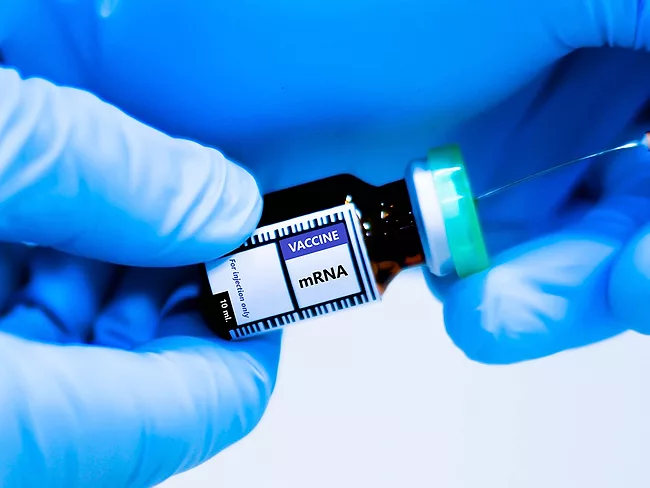
Cancel culture continues at the U.S. Department of Health and Human Services (HHS) as it observes National Immunization Awareness Month with another strike against vaccines. This time, a $500 million strike specifically targets 22 mRNA vaccine R&D programs at the Biomedical Advanced Research and Development Authority (BARDA), marking the beginning of the end of BARDA’s funding for mRNA vaccines.
While U.S. President Donald Trump’s country-by-country reciprocal and newly negotiated tariffs go into effect today, a separate, global biopharma sector tariff of, possibly, 200% continues to loom over the sector. For many stakeholders, a biopharma sector tariff of even 25%, as first proposed by Trump, would be a disaster in the making, especially when combined with the pressures of Medicare price negotiations and the president’s escalation of most-favored-nation pricing.
The other shoe dropped on the U.S. CDC’s Advisory Committee for Immunization Practices (ACIP) when at least nine liaison organizations were informed by email late July 31 that they would no longer be involved in ACIP’s process of reviewing scientific evidence and informing vaccine recommendations.
While U.S. President Donald Trump’s country-by-country reciprocal and newly negotiated tariffs go into effect today, a separate, global biopharma sector tariff of, possibly, 200% continues to loom over the sector. For many stakeholders, a biopharma sector tariff of even 25%, as first proposed by Trump, would be a disaster in the making, especially when combined with the pressures of Medicare price negotiations and the president’s escalation of most-favored-nation pricing.
The Senate Appropriations Committee met July 31 to markup legislation that would fund the Department of Health and Human Services – including an additional $400 million for the National Institutes of Health. The increase in NIH funding repudiates the Trump administration’s efforts to drastically cut those appropriations, which is an outcome marking a clear win for companies in the life sciences.
President Donald Trump sent letters July 31 to the CEOs of 17 major drug manufacturers doing business in the U.S., giving them 60 days to comply with his May 12 executive order (EO) on most-favored-nation (MFN) pricing. The EO appealed to drug companies to undertake MFN pricing voluntarily to end the freeloading in which other developed countries pay, on average, three times less than Americans are charged for the same medicines.
While U.S. government cost-cutting seems to be the Trump administration’s priority that consumes all others, some Republican senators are pushing back – at least when it comes to the NIH. Fourteen senators wrote to Russell Vought, head of the White House Office of Management and Budget, to voice their concerns about the administration’s slow disbursement rate of the NIH’s fiscal 2025 funds.
 RSS
RSS