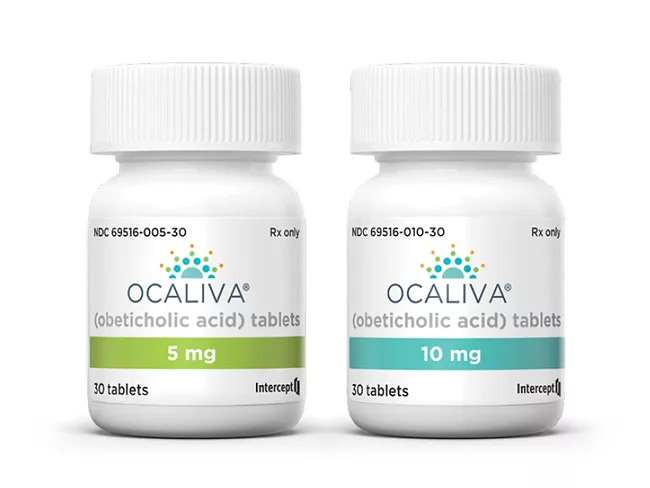
Those affected by primary biliary cholangitis (PBC) are fighting back against the recommendation by the EMA that the marketing authorization for Ocaliva (obeticholic acid), a second-line treatment used by 7,000 patients in Europe, be withdrawn. Earlier today, July 25, patients and their supporters staged a protest outside the European Commission building in Brussels to oppose EMA’s position that Ocaliva’s conditional license should be revoked.
The July 25 meeting of the U.S. FDA’s Oncologic Drugs Advisory Committee (ODAC) could impact the future development of immune checkpoint inhibitors, such as Astrazeneca plc’s Imfinzi, to treat patients with non-small-cell lung cancer (NSCLC) both before and after surgery. Although much of the discussion will focus on an sBLA for Imfinzi (durvalumab), the committee will be asked to vote on whether the FDA should require that new trial design proposals for perioperative regimens for resectable NSCLC include adequate within-trial assessment of the contribution of the treatment phase to efficacy results.
The U.S. Patent and Trademark Office has provided updated guidance on the question of patent subject matter eligibility for inventions that rely on artificial intelligence, stating that a patent claim that does little more than recite an abstract idea is not subject-matter eligible.
The U.S. FDA accepted Telix Pharmaceuticals Ltd.’s new drug application for TLX-007-CDx, a new cold kit for preparing prostate-specific membrane antigen-PET imaging for prostate cancer.
Samsung Bioepis Co. Ltd., of Incheon, South Korea, gained U.S. FDA approval of Epysqli (eculizumab-aagh) as the second biosimilar product to Alexion Pharmaceuticals Inc.’s Soliris (eculizumab) to treat two rare diseases. The regulatory clearance July 22 grants use of Epysqli to treat paroxysmal nocturnal hemoglobinuria and atypical hemolytic uremic syndrome – two rare hematologic- and kidney-related disorders known to affect about 50,000 and 5,000 patients in the U.S., respectively.
The U.S. Department of Health and Human Services’ Office of the Inspector General disclosed an advisory opinion finding Bluebird Bio Inc.’s fertility support program for a gene therapy treatment could run afoul of federal anti-kickback statutes. That follows a similar opinion against Vertex Pharmaceuticals Inc., and its fertility program associated with gene-editing therapy Casgevy (exagamglogene autotemcel). Vertex subsequently filed a lawsuit.
Noting that the median list price of new drugs that entered the U.S. market last year hit $300,000, senior officials of the three biggest pharmacy benefit managers (PBMs) in the country once again denied responsibility for those prices as they testified before the House Oversight Committee July 23 in the third hearing the committee has held on PBM practices.
As the U.S. Congress continues to pass laws that require federal agencies to issue rules to implement new statutory provisions, a group of lawmakers is reminding the agencies that it will be looking over their shoulders to ensure they don’t stray beyond the scope of the law or overstep their authority.
The U.S. FDA approved 28 new drugs in June, marking the third-highest month in BioWorld’s records, following March 2024’s 30 approvals and June 2020's 29 approvals, and a significant increase from May’s 11 FDA drug approvals. For context, the FDA approved an average of around 16 drugs per month in 2023, 12.5 per month in 2022, and 17 per month in both 2021 and 2020.
The U.S. FDA advised Agenus Inc. to conduct a phase III trial for its immunotherapy combination, botensilimab (bot) and balstilimab (bal), instead of seeking accelerated approval based on phase II data, sending company shares plunging by 58.8% July 18.
 RSS
RSS