Uniqure NV is regrouping after a surprise switcheroo by the havoc-beset U.S. FDA regarding phase I/II studies with AMT-130 vs. external control in Huntington’s disease (HD) – news of which pushed down the Lexington, Mass.-based firm’s shares (NASDAQ:QURE) Nov. 3 by $33.40, a loss of 49%, at the closing price of $34.29.
The U.S. FDA once again has a leadership gap at the top of its drug center, which already has been ravaged this year by massive terminations, resignations and retirements of senior leaders. George Tidmarsh, a biopharma industry veteran who’s helmed CDER for a little more than three months, resigned effective immediately Nov. 2 after being placed on administrative leave two days earlier amid a Department of Health and Human Services probe.
Celltrion Inc. announced Oct. 29 the signing of an $87.75 million joint drug R&D agreement with AI and spatial transcriptome-based biotech Portrai Inc.
John Crowley doesn’t worry about where his kids’ toys are made, but he told the Senate Health, Education, Labor and Pensions Committee that he does care where their medicines are made. His concerns, as a father and as president/CEO of the Biotechnology Innovation Organization, are becoming more urgent, he testified at an Oct. 29 HELP hearing on the future of biotech in the U.S.
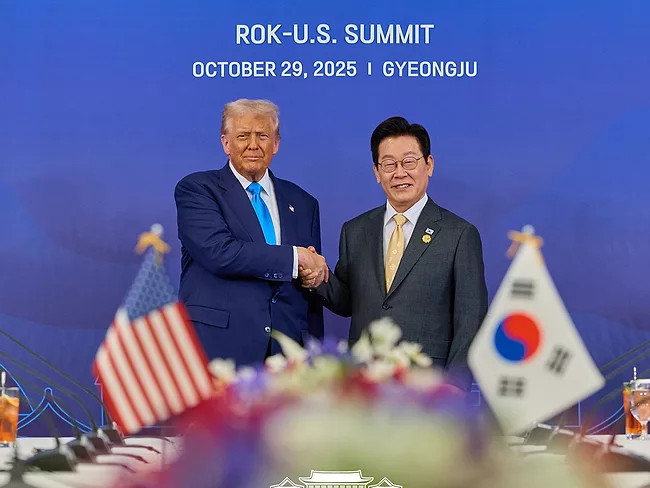
The Korea Biotechnology Industry Organization on Oct. 30 welcomed the bilateral trade deal between the U.S. and South Korea announced during U.S. President Donald Trump’s state visit alongside the Asia-Pacific Economic Cooperation forum in Gyeongju, South Korea.
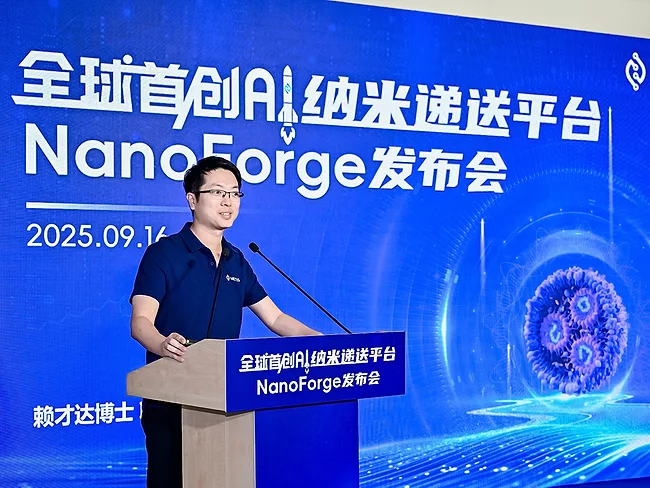
Based on positive phase III study results, Metis Techbio is planning to file an NDA for its AI-derived orally disintegrating tablet drug candidate for pseudobulbar affect, MTS-004, in China next year.
Hanmi Pharmaceutical Co. Ltd. announced Oct. 27 that its glucagon-like peptide-1 receptor agonist, efpeglenatide (HM-11260C), met the co-primary endpoints in a phase III study of obese adults without diabetes.
Based on positive phase III study results, Metis Techbio is planning to file an NDA for its AI-derived orally disintegrating tablet drug candidate for pseudobulbar affect, MTS-004, in China next year.
The U.S. FDA approved 17 drugs in September 2025, following 18 approvals in August and 17 in July. That brings the year-to-date total to 160 approvals for the first three quarters, making it the second-highest total on record for this period, behind 183 approvals logged during the same timeframe in 2024.
The U.S. FDA named the first nine recipients of the recently unveiled commissioner’s national priority voucher (CNPV) program aimed at addressing unmet public health needs by shortening regulatory review times to as little as one to two months. For one of those firms, Disc Medicine Inc., which submitted an NDA for bitopertin for rare genetic disorder erythropoietic protoporphyria in September, that could mean a potential approval before the end of 2025.
 RSS
RSS