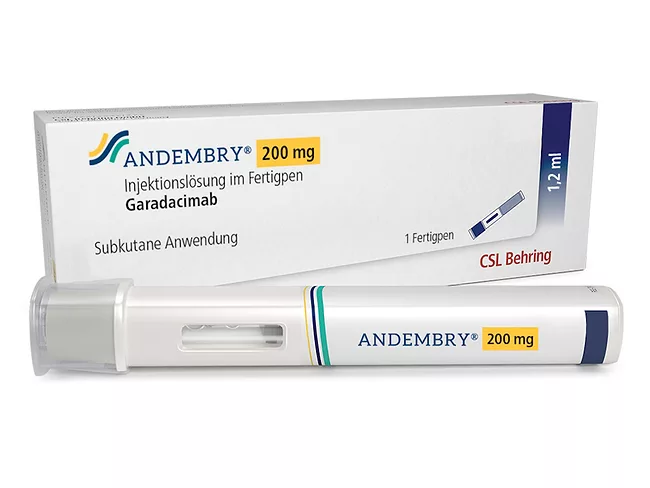
Following a complete response letter issued last October over CMC issues, CSL Behring LLC gained U.S. FDA approval June 16 of its humanized anti-factor XIIa monoclonal antibody, garadacimab (CSL-312), to prevent hereditary angioedema attacks.
Calling it “incredible news,” Massachusetts Attorney General Andrea Joy Campbell reported June 16 that U.S. District Judge William Young ordered the Trump administration to restore funding for NIH research grants focusing on gender and diversity, equity and inclusion (DEI).
The COVID-19 pandemic sent the world into a tailspin, raising ongoing concerns about biosecurity, a subject that encompassed the better part of the morning June 16, the first day of the Biotechnology Innovation Organization’s annual conference in Boston.
The U.K. government has announced the latest measures to speed up and expand clinical trials, launching Be Part of Research, a central national register where people can search and sign up to take part in studies.
How the U.S. FDA might respond became a serious question for Wall Street as Sarepta Therapeutics Inc. made known a second death due to acute liver failure with gene therapy Elevidys (delandistrogene moxeparvovec), cleared for Duchenne muscular dystrophy (DMD). Shares of Cambridge, Mass.-based Sarepta (NASDAQ:SRPT) closed June 16 at $20.94, down $15.24, or 42%, as Wall Street digested the news.
During a conference call after the U.S. FDA approval of Zusduri (mitomycin), Urogen Pharma Ltd. CEO Liz Barrett offered candid observations about a “roller-coaster ride” sparked by a mixed-outcome advisory panel meeting held May 21. Zusduri is designed to treat recurrent low-grade, intermediate-risk, non-muscle invasive bladder cancer.
And then there were eight. That is, eight members of the U.S. CDC’s Advisory Committee for Immunization Practices (ACIP).Two days after dismissing the 17 members of the committee, Health and Human Services Secretary Robert Kennedy named eight new members to the panel. Eight is the minimum required for a quorum, which will be necessary for the June 25-27 ACIP meeting.
Slightly ahead of the assigned June 23 PDUFA date, Nuvation Bio Inc. scored the U.S. FDA’s go-ahead for Ibtrozi (taletrectinib) to treat adults with locally advanced or metastatic ROS1-positive non-small-cell lung cancer (NSCLC).
The U.K. government has doubled the rate that pharmaceutical companies must repay on sales of branded drugs, under the statutory rebate scheme, to a record 31.3%. Only 1-2% of total sales of branded drugs fall under the statutory scheme, but the increase is seen as a sign that an ongoing review of the voluntary scheme is not going well.
When it comes to the U.S. biopharma market, pricing seems to be the driving focus of most congressional conversations – and government contracts. Rep. Cliff Bentz, R-Ore., hit pause on that conversation at a June 11 House subcommittee hearing on the drug supply chain, when he asked if the U.S. is sacrificing security for price.
 RSS
RSS