Even though Cytokinetics Inc. received applause for testing its heart failure drug, omecamtiv mecarbil, in the second largest global heart disease clinical trial ever, the drug didn’t get a standing ovation from the U.S. FDA’s Cardiovascular and Renal Drugs Advisory Committee (CRDAC) Dec. 13.
What could be Cytokinetics Inc.’s first approved drug will take center stage Dec. 13 at a meeting of the U.S. FDA’s Cardiovascular and Renal Drugs Advisory Committee. But judging from the FDA’s briefing document for the meeting, the spotlight on the heart failure drug, omecamtiv mecarbil, could be harsh.
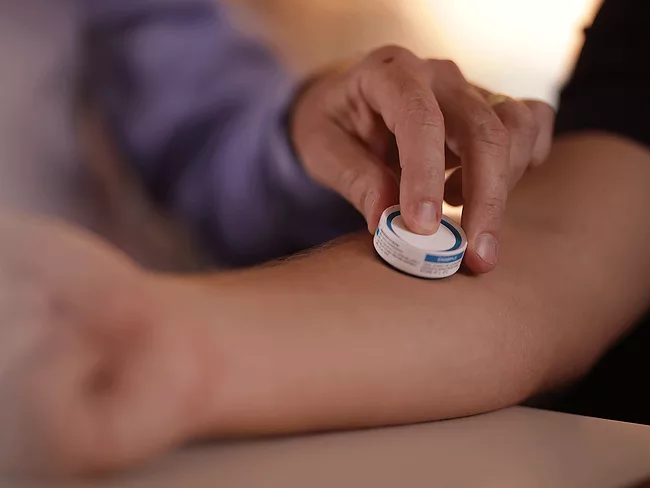
Vaxxas Pty. Ltd. raised AU$34 million (US$23 million) to advance its needle-free COVID-19 vaccine program, which began in early November, and readouts from the study are expected in late February or early March, Vaxxas CEO David Hoey told BioWorld. The COVID-19 vaccine patch is based on the company’s high-density microarray patch technology that delivers Hexapro, a second-generation version of the spike protein used in all major U.S.-approved COVID-19 vaccines.
The positively charged nanoparticle polyamidoamine generation 3 (P-G3) can be specifically targeted to either visceral or subcutaneous fat, and affects both types of fat in different ways, researchers from Columbia University reported in two papers recently published. The studies, published online in Nature Nanotechnology on Dec. 1, 2022, and in Biomaterials on Nov. 28, 2022, are both “a conceptual advance” and “quite amenable to translation,” co-corresponding author Kam Leong told BioWorld.
Full-Life Technologies Ltd. reported that it will acquire Focus-X Therapeutics Inc. to expand its radiopharmaceutical oncology therapy pipeline in a deal worth up to $245 million.
A combination of radiation therapy and CD47 blockade induced an abscopal effect in animal studies even in animals that lacked T cells, researchers reported in the Nov. 21, 2022, online issue of Nature Cancer. The findings are “the first demonstration of T-cell-independent abscopal response,” co-corresponding author Edward Graves told BioWorld. “We’re not trying to say that all abscopal responses are macrophage-mediated. There are plenty that require T cells,” Graves clarified. But “there is another avenue of abscopal responses that has not been reported. ... All the abscopal literature is about stimulating an adaptive response.”
As IPOs have slowed significantly in 2022, so have the debuts of special purpose acquisition companies (SPACs) targeting the life sciences industry, primarily due to two looming threats. This time a year ago, BioWorld had tracked 60 IPOs of SPACs searching for biopharma or med-tech targets and nearly 30 SPACs that had secured acquisitions. For 2022, there are 21 SPACs currently searching, and only two of those went public this year. As for completed M&As involving SPACs, there have been 17 this year and another nine that are pending.
Global interest in radiopharmaceuticals is growing, and some big deals in the space have sparked interest in the last few years. Novartis AG has spent about $6 billion in acquisitions and is seen as the global leader.
 RSS
RSS