Novocuff Inc. closed an oversubscribed $26 million series A funding round to support further development of the Novocuff cervical control system, which is designed to reduce preterm births by closing the cervix in high-risk pregnancies. The funds will enable the company to undertake a U.S. multi-center pivotal clinical trial, pursue marketing authorization, expand its team and begin early-stage commercialization of the device.
The coverage with evidence development (CED) process employed by the U.S. Medicare program may suffer from underutilization, but the authors of a new article in Value in Health see the attendant problems as administrative in nature. The issues include, but are not limited to, a lack of predictability as to when a CED study would be required for coverage of a medical device.
GE Healthcare Technologies Inc. entered into a conditional agreement to acquire the clinical AI business of Intelligent Ultrasound Group plc for £40.5 million (US$51 million). The deal is part of GE Healthcare’s effort to bolster its portfolio of artificial intelligence-enabled devices and strengthen its ultrasound business.
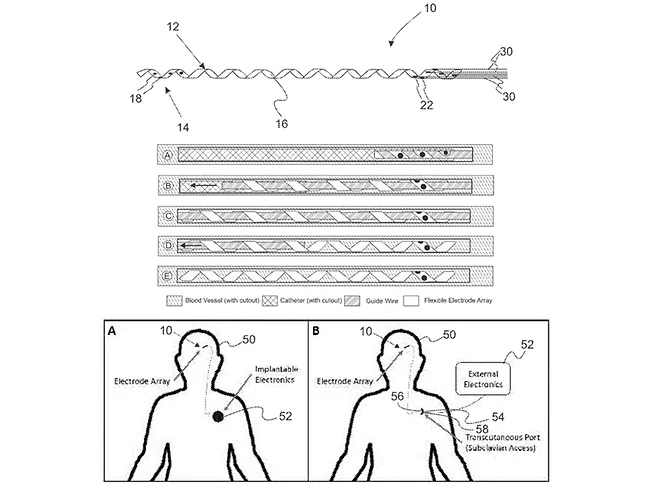
Researchers from the University of Southern California filed for protection of a thin film electrode array they developed to be implanted using endovascular methods for minimally invasive, high-resolution electrical recording and stimulation of the nervous system and other electrogenic tissue.
Med-tech happenings, including deals and partnerships, grants, preclinical data and other news in brief: 10x Genomics, Boehringer Ingelheim, Brainomix, Bruker, Grail, Laborie, Microbot, Novocuff, Signati Medical, Stimlabs.
Regulatory snapshots, including global submissions and approvals, clinical trial approvals and other regulatory decisions and designations: Restore Medical.
Mutations in the metabolic enzyme isocitrate dehydrogenase 1 (IDH1) induce tumorigenesis due to generation of the oncometabolite (R)-2-hydroxyglutarate (R-2HG). A hallmark of solid tumors carrying mutations in IDH1 is immune evasion by T-cell exclusion and altered epigenetic state. Researchers from the Center for Cancer Research, Massachusetts General Hospital have published a study in Science on July 12, 2024, in which they demonstrate that inhibiting mutant IDH1 restored antitumoral immunity.
 RSS
RSS