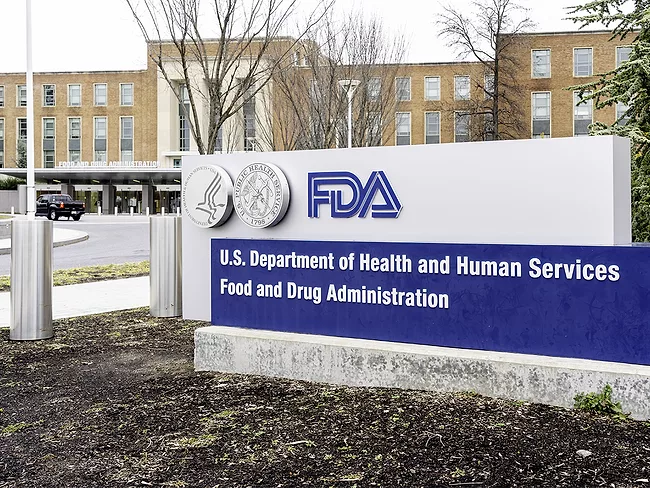
The FDA reported a class I recall of the Wirion embolic protection device by Cardiovascular Systems Inc. (CSI), of St. Paul, Minn., due to reports of nine instances of device malfunction. The agency said the filter portion of the device can be difficult to withdraw under some circumstances and thus lead to separation, although the FDA noted that no deaths have been reported in association with the issue despite the risk of embolization. The FDA’s device center also posted a Jan. 11 notification against the use of two tests by Lusys Labs Inc., of San Diego, for the SARS-CoV-2 virus.
Where’s the plan? That was the underlying question Jan. 11 as Biden administration health officials faced frustration and tough questions from both Democrats and Republicans on the Senate Health, Education, Labor and Pensions (HELP) Committee about how the U.S. government is responding to the surge of COVID-19 infections caused by the omicron variant.
Clinicians at the University of Maryland have transplanted a heart from a genetically modified pig bred by Revivicor Inc., a subsidiary of United Therapeutics Corp., into a patient with end-stage heart failure.
Medtronic plc continued its aggressive acquisition strategy today with the announcement of an agreement to purchase Affera Inc. Medtronic Chairman and CEO Geoff Martha revealed in a presentation on Jan. 10 at the virtual edition of the J.P. Morgan Healthcare Conference that his company was paying $925 million for the cardiac mapping and navigation company. The total reflects $250 million in payments assuming Affera meets “contingent considerations.”
Owens & Minor Inc. (O&M) sent Apria Inc. shares out of the ballpark with the announcement of its acquisition of the at-home health care company for $1.45 billion in cash early this morning. Apria’s stock (NASDAQ:APR) closed Friday at $29.72, opened today at $37.16 and rose incrementally throughout the day to close at $37.48. O&M’s stock (NYSE:OMI) ended the week at $45.08; it ebbed sharply to $40.19 on the news before recovering to $45.35 at the end of the trading day.
The FDA has posted a draft guidance responding to changes in the law regarding device shortages during public health emergencies. The guidance says that manufacturers should advise the FDA of any impending shortages, but the key qualifier, that of a “meaningful disruption” in production, may be sowing confusion in the industry.
The U.K. National Institute for Health and Care Excellence (NICE) has recommended the use of the Kardiamobile as an option for detecting atrial fibrillation (AF) events in patients diagnosed with suspected paroxysmal AF. Alivecor Inc., of Mountain View, Calif., is the obvious beneficiary of the recommendation, a good bit of news given the company’s struggles to maintain patent protection for its products.
In vitro diagnostic (IVD) company Virtue Diagnostics (Suzhou) Co. Ltd. has raised $100 million in a series B round to develop its clinical diagnostics and bring them to other markets. “With the latest funding, Virtue Diagnostics will hire talent, introduce technology, and expand to other markets,” said Johnson Zhang, CEO of Virtue Diagnostics.
Digital health innovation was front and center at this year’s Consumer Electronic Show (CES) in Las Vegas. The four-day event included a major product announcement from Abbott Laboratories and a keynote presentation delivered by CEO Robert Ford. This marked the first time a health care company has been invited to take the main stage.
Regulatory snapshots, including global submissions and approvals, clinical trial approvals and other regulatory decisions and designations: 23andme, Abiomed, Medtronic.

 RSS
RSS