PERTH, Australia – Australia's Therapeutic Goods Administration (TGA) is requiring manufacturers of permanently implantable devices to provide patient implant cards and consumer device leaflets with their devices, beginning Dec. 1. New implantable devices will need to comply by Dec. 1, 2020, and existing implantable devices will have until Dec. 1, 2021, to comply.
An international study led by Nanyang Technological University in Singapore has designed and synthesized broad-spectrum antimicrobial polymers (AMPs) and demonstrated the safety and efficacy of two such agents against multidrug-resistant (MDR) bacteria in mouse models of sepsis.
Med-tech happenings, including deals and partnerships, grants, preclinical data and other news in brief: Avinger, Australian Biotechnologies, Elixirgen, Flowmetric, Onegevity, RenalytixAI, Ricoh, Sherlock Biosciences, Shockwave Medical, Spartech, The Commons Project, Theracell, Tolo Biotech, Tufpak.
Keeping you up to date on recent developments in neurology, including: AI developed to predict psychiatric diagnoses from Facebook activity; AIR coil from GE Healthcare shows promise for whole-brain imaging; Big data analysis suggests role of brain connectivity in epilepsy-related atrophy; Gestational age linked to ADHD in children with Down syndrome.
PARIS – Researchers at the Biomechanics and Bioengineering laboratory (BMBI), a joint venture between the Compiègne University of Technology in Oise, France, and the National Center for Scientific Research (CNRS), have designed a new implant intended for minimally invasive surgery for mitral valve repair. One of the BMBI teams has been working closely two cardiovascular surgeons from the University Hospital of Henri-Mondor to develop this new minimally invasive approach in the treatment of mitral valve regurgitation.
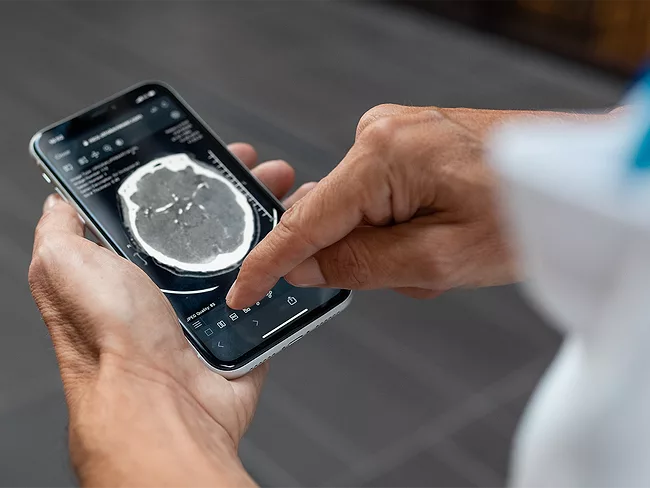
For the 795,000 Americans who suffer a stroke each year, time is brain. The U.S. FDA granted 510(k) clearance to a solution the developer says could cut time-to-treatment in stroke by an hour, preserving 3.6 years of healthy life. Nico.lab’s artificial intelligence-based CT scan analyzer, Strokeviewer LVO, uses an algorithm that enables faster triaging of stroke patients and enables physicians to see the location of occlusions in minutes.
 RSS
RSS