Sometimes the darkest products (names) bring a bright spot of news to their developers, as the U.S. FDA clearance for Galway, Ireland-based Medtronic plc's Onyx liquid embolic system demonstrates. Onyx gained the indication for embolization of the middle meningeal artery as an adjunct to surgery for the treatment of symptomatic subacute or chronic subdural hematoma based on the EMBOLISE trial results. The approval represents a significant advancement in treating this common neurosurgical condition.
Ebenbuild GmbH is hoping that its digital twin technology platform that combines AI and physics-based computational models tailored to individual patients will transform respiratory care. From drug development to optimizing mechanical ventilation in critical care, the company’s software-based solutions aim to reveal what is happening in the ‘black box’ of the lungs, helping clinicians to improve outcomes and reduce mortality.
Med-tech financing activity from January through November 2025 reached $31.32 billion, marking a strong rebound from the sector’s lows in 2023 to 2024, which saw $16.61 billion and $23.64 billion in the same period, respectively. While still far below the capital inflows seen in 2020 and 2021, when the first 11 months of the year exceeded $48 billion, the steady upward progression over recent years suggests renewed investor engagement and improving capital availability. In November, $4.73 billion was collected through 36 transactions, up from $3.25 billion in October.
Med-tech happenings, including deals and partnerships, grants, preclinical data and other news in brief: Cadwell Industries, Datasea, Essilorluxottica Mainstay Medical, Sentante.
Regulatory snapshots, including global submissions and approvals, clinical trial approvals and other regulatory decisions and designations: Peijia Medical, Ruthless Spine, Zenflow.
Investigators at the Netherlands Hubrecht Institute have developed a novel gut organoid model, and used it to gain insight into the functions on human microfold (M) cells. Their experiments, which were published in the Dec. 10, 2025, issue of Nature, showed that M cells present gluten-derived antigens to T cells, which suggests a role for this cell type in the onset of celiac disease.
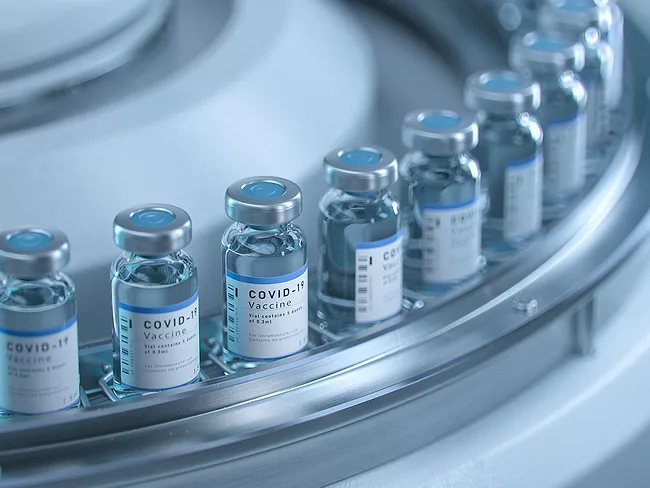
Restricting the recommended use of COVID-19 vaccines in the U.S. wasn’t enough. Now the Children’s Health Defense (CHD) is trying to get the FDA to revoke the BLAs for all versions of the Moderna Inc. and Pfizer Inc.-Biontech SE COVID-19 vaccines.
Flow Neuroscience AB received U.S. FDA 510(k) approval for its Flow at-home brain-stimulation device to treat major depressive disorder. The wearable headset uses mild electrical current to stimulate specific areas of the brain to reduce depressive symptoms in as little as three weeks.
 RSS
RSS