Spirair Inc. won the race for the first U.S. FDA 510(k) clearance for a minimally invasive therapy for nasal septal deviation (NSD), the company said. The Septalign system features a bioabsorbable implant that enables minor cartilaginous septal deviation that can be placed in an office with local anesthesia.
“Traditional septoplasty and septorhinoplasty can require significant time away from work, with nearly 42% of patients requiring two weeks or more for recovery. With Septalign, recovery is much faster and requires little to no time away from work for recovery,” Spirair CEO Ben Bishop told BioWorld.
As with most common diseases of the developed world, aging is the major risk factor for developing cancer. Most of the half-dozen hallmarks of precancer that were published last week by investigators from Vanderbilt University and the Fred Hutchinson Cancer Research Center are also hallmarks of aging.
Unfortunately, scientists reported at the American Association for Cancer Research’s (AACR) 2024 annual meeting this week that accelerated aging is increasing, and may be driving an increase in early-onset cancers.
Med-tech powerhouse Johnson & Johnson made a bold bid to bolster its interventional cardiology holdings with the news on April 5 that it is acquiring Shockwave Medical Inc. for approximately $13.1 billion including cash acquired. The $335 per share cash price represents a more than 5% premium to Shockwave’s (Nasdaq: SWAV) April 4 closing price.
Regulatory snapshots, including global submissions and approvals, clinical trial approvals and other regulatory decisions and designations: Prenosisk, Sebia.
Med-tech happenings, including deals and partnerships, grants, preclinical data and other news in brief: California X-ray Imaging, Emboline, Luscii, Omron, Quantaix, Shimadzu, Sophia, Strand Life Sciences, Swat Medical.
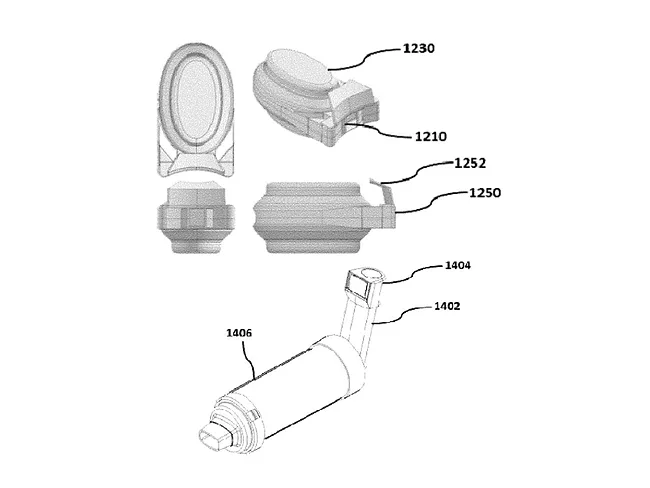
In what represents its first patenting, Halifax, Nova Scotia-based Hollo Medical Inc. seeks protection for its product that is designed for inhaler users who are frustrated with cumbersome valved holding chambers and desire something more compact and portable.
Some warning letters issued by the U.S. FDA are fairly simple matters, but that statement does not appear to apply to the Oct. 13, 2023, warning letter to Renovo Inc., of Bend, Ore. The warning letter provided a laundry list of sterilized reusable devices the agency said were not properly validated for sterilization, but the company rebutted these allegations in a vigorous defense of its reputation as a reprocessor.
 RSS
RSS