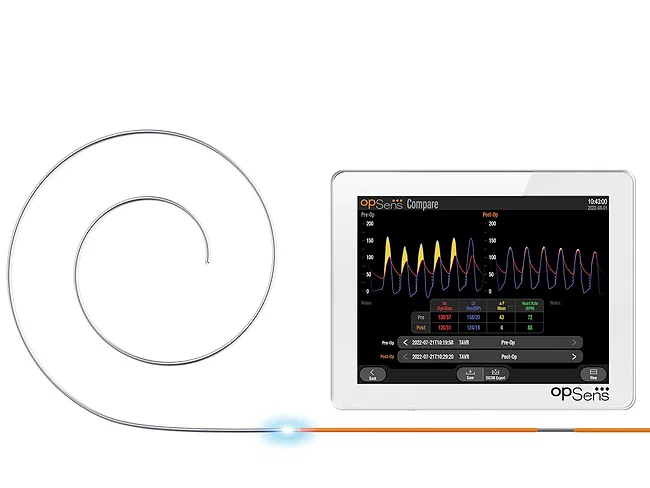
Haemonetics Corp. returned to the M&A trail with an agreement to buy Opsens Inc., a cardiology-focused medical device company, for CA$2.90 (US$2.13) per share for a total of CA$345 million (US$253 million). The all-cash transaction, its third significant purchase in five years, is expected to close by late January 2024, pending the approval of regulators and 66.66% of voting shareholders. Haemonetics expects the deal to be immediately accretive to adjusted earnings per share (EPS).
The U.S. FDA 510(k) clearance of Airamed GmbH’s Airascore software could see millions of people benefitting from early accurate diagnosis of Alzheimer’s disease and other types of dementia. Airascore is a medical image management and processing system that uses deep learning and artificial intelligence (AI) to assess brain volumetry data on MRI scans in as little as five minutes.
The U.S. FDA’s final guidance for clinical decision support (CDS) systems may be the subject of two citizen’s petitions requesting the agency scrap the guidance and start over, but that doesn’t mean the agency is not enforcing the terms of the guidance. Danvers, Mass.-based Abiomed Inc., took in a Sept. 19 warning letter stating that the company’s Impella Connect system qualifies as a CDS product because it provides “patient-specific medical information to detect a life-threatening condition,” an interpretation that is sure to intensify the larger debate about whether the CDS final guidance is an extra-statutory exercise in regulatory engineering.
Med-tech happenings, including deals and partnerships, grants, preclinical data and other news in brief: 3M Health Care, Belle.ai, Biocardia, Creative Medical, Femasys, Fibronostics, Mediwound.
Regulatory snapshots, including global submissions and approvals, clinical trial approvals and other regulatory decisions and designations: Boston Scientific, Intelivation Technologies.
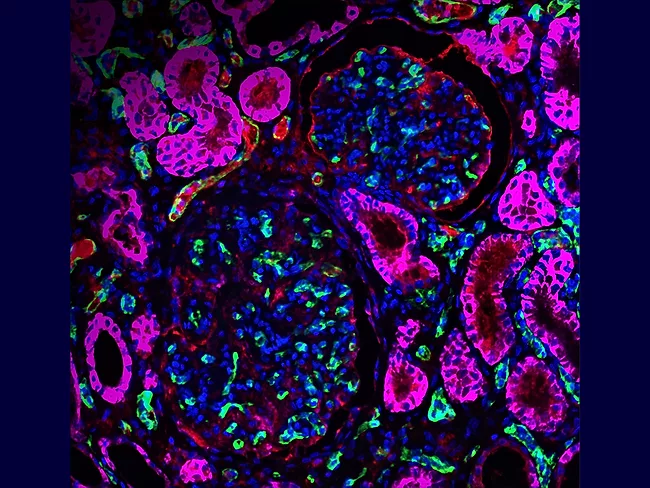
Scientists at Egenesis Inc. have transplanted kidneys from genome-edited pigs into cynomolgus monkeys that remained functional for long periods after transplantation. The monkeys, whose own kidneys were removed during the surgery, survived for a median of 176 days after receiving one pig kidney. Maximal survival was just over 2 years. The data were published today in Nature. Egenesis CEO Mike Curtis told reporters that the study has achieved the longest survival to date “using clinically translatable immunosuppression … longer survival has been achieved using really aggressive immunosuppression that really isn’t clinically translatable.”
The U.S. FDA’s draft guidance for predetermined change control plans (PCCPs) is one of the more innovative regulatory proposals in recent memory, although the FDA is not statutorily required to limit this policy to artificial intelligence (AI) and machine learning (ML) products. Nonetheless, the PCCP concept is starting to show signs of being consumed by the debate over AI and ML medical software, so much so that industry may be losing sight of the opportunities the PCCP concept offers in other types of medical technologies.
The U.S. FDA’s draft rule for regulation of lab-developed tests (LDTs) was a long time in coming, much longer than any legislative proposals to overhaul the agency’s regulatory mechanisms for these tests. Nonetheless, Scott Whitaker, president and CEO of the Advanced Medical Technology Association (Advamed), believes that the FDA draft rule is likely to prompt Congress to pass the Verifying Accurate, Leading-edge IVCT development (VALID) Act, a development that would truncate an FDA final rule that would almost certainly face litigation.
 RSS
RSS