Valentine’s Day is a great day for creating that tingly feeling, but Abbott Park, Ill.-based Abbott Laboratories believes that this is not a good sensation for patients who are in search of pain relief via spinal cord stimulation (SCS) devices. Thus, the company touts its Proclaim Plus as a system that delivers a tightly titrated charge to multiple sites on the spinal cord to generate an analgesic effect without that tingling sensation, an outcome the company said is preferred by 87% of those in need of SCS for pain relief.
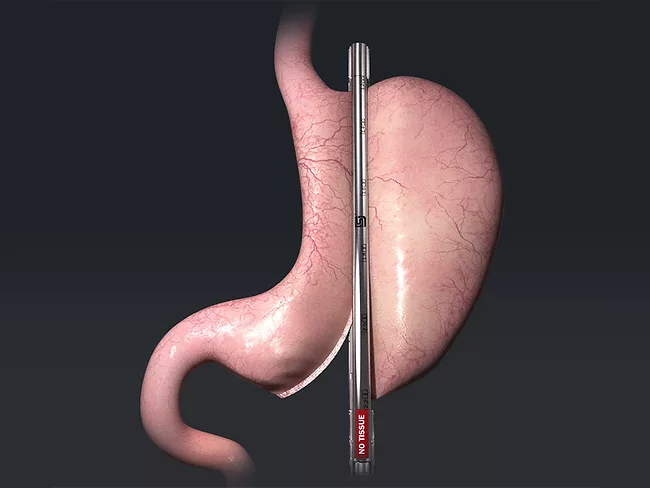
Teleflex Inc. is going big on its investment in the business of helping people reduce their size with an agreement to acquire Standard Bariatrics Inc. for an upfront cash payment of $170 million with contingent payments of $130 million upon achievement of specified commercial milestones. The companies expect to close the transaction early in the fourth quarter of 2022. Standard Bariatrics produces a novel clamp and staple system for gastric sleeve surgery, the Titan sleeve gastrectomy stapler (SGS).
Regulatory snapshots, including global submissions and approvals, clinical trial approvals and other regulatory decisions and designations: Abbott, Elekta, Koag, Miracor Medical, Thorne Healthtech.
Noninvasive electrical stimulation of the brain for 20 minutes per session over four days has been demonstrated to improve both working- and long-term memory for at least one month, in people ages 65 to 88.
The U.S. FDA has identified a recall of Medtronic cardiac electrophysiology devices as a class I event due to the risk of an inadequate delivery of energy to restore normal rhythm, a recall that affects more than 87,700 units in total. Dublin-based Medtronic plc., said, however, that it is developing a software patch that will remedy the issue, a fix the company said will emerge in late 2022.
Medical device product liability litigation can take a number of seemingly unique twists and turns, but the case of Nelson v. Bard took a path that might have been predicted based on FDA-mandated labeling content. The U.S. Court of Appeals for the Fifth Circuit affirmed a lower court’s ruling that the instructions for use for a Bard inferior vena cava filter indemnified the company because the IFU listed the very events seen by the patient, undercutting the patient’s claim that Bard had failed to warn of these events.

 RSS
RSS