The first fully robot-assisted cataract surgery recently performed using Forsight Robotics Ltd.’s Jasper platform was not only a “transformative” event and a major “milestone” for the company, but also a “huge step forward for the industry,” Joseph Nathan, co-founder, president and chief medical officer, told BioWorld. With one in two people globally needing cataract surgery and unable to get access to care, robot-assisted platforms hold the potential to increase surgical throughput and broaden access to treatment.
Artificial intelligence tools are springing up at multiple points along drug discovery and development, but despite the hype, as yet there is minimal return on investment (ROI). “I would say a lot of companies sort of get this big excitement about AI, but then when you look at how much ROI they get, it’s actually very little. And that’s because the workflow and the process, end-to-end, isn’t mapped to really understand where AI can truly make an impact,” said Laura Matz, chief science and technology officer at Merck KGaA.
Boston Scientific Corp.'s CEO Mike Mahoney said that the year is turning out to be “more challenging” than the company anticipated, prompting a cut to its organic sales growth guidance to 6.5% to 8%, from 10% to 11%. The company also lowered its adjusted earnings-per-share guidance to $3.34 to $3.41, from $3.43 to $3.49 previously. Analysts welcomed the lower guidance seeing it as somewhat of a relief and an opportunity to reset on the back of the company’s share price, which has fallen sharply over the last year.
Total med-tech financings reached $8.81 billion in the first quarter (Q1) 2026, a 6% decline from $9.33 billion in Q1 2025 but well above the post-downturn lows of recent years.
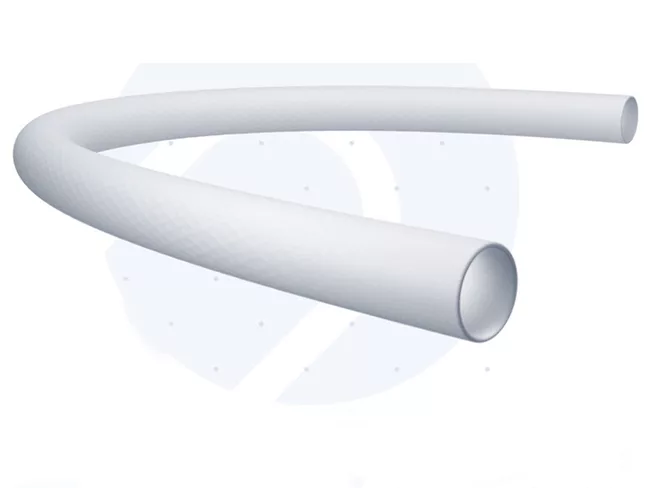
Xeltis BV has secured CE mark approval for Axess, its restorative vascular access conduit for hemodialysis. The company also released 12-month data from its EU pivotal trial on the technology, which showed strong durability outcomes, including 79% secondary patency and a very low patency‑related reintervention rate of 1.3 per patient-year, as well as a substantial reduction in infection burden.
A new metasurface design strategy that replaces rigid order with “engineered disorder” could significantly increase how many optical functions can be integrated into a single ultra-thin device without increasing size or complexity, according to a study published in Nature Communications. The study challenges a longstanding assumption in optical engineering that highly ordered, periodic structures are required to precisely control light.
Pulnovo Medical Ltd. secured $100 million in a financing round led by Medtronic plc for its pulmonary artery denervation system to treat pulmonary hypertension.
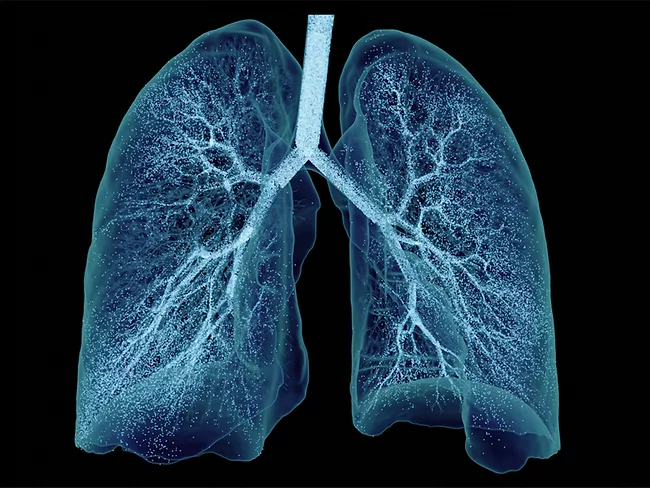
The ability of Ebenbuild GmbH’s digital twin technology to predict the deposition of inhaled drugs across the lungs has been validated in a study published in Nature Communications Medicine. The platform, which combines AI-driven image analysis and physics-based computational modeling, demonstrated strong agreement with in vivo imaging data across multiple inhalation scenarios.
Total med-tech financings reached $8.81 billion in the first quarter (Q1) 2026, a 6% decline from $9.33 billion in Q1 2025 but well above the post-downturn lows of recent years. The 2026 total exceeds $6.45 billion in Q1 2024 and $4.69 billion in Q1 2023, indicating continued recovery from the weaker funding environment that followed the 2021 peak. While still below the $16.59 billion recorded in Q1 2019 and the pandemic-era highs, the data suggest that financing activity has stabilized at a higher baseline, with 2026 maintaining momentum despite a slight year-over-year pullback.
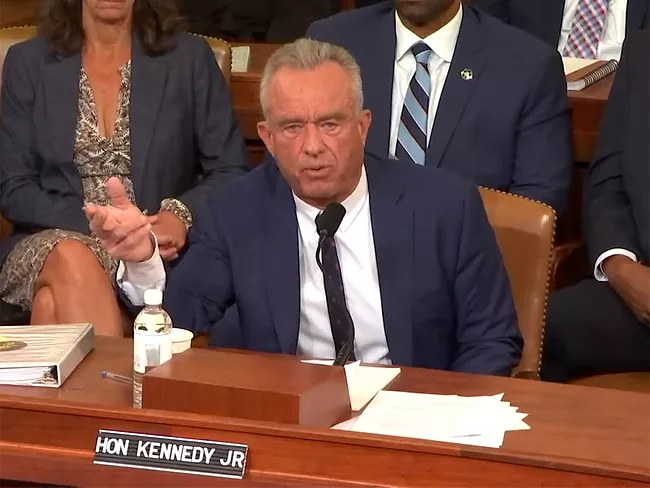
U.S. Health and Human Services (HHS) Secretary Robert Kennedy made his first stop April 16 on a congressional tour in support of President Donald Trump’s proposed fiscal 2027 budget, which would reduce discretional spending for HHS and its agencies by about 12%.
 RSS
RSS