Quibim SL and Royal Philips NV have teamed up to utilize their artificial intelligence (AI)-enabled solutions to help clinicians deliver faster diagnosis and treatment of patients with prostate cancer. The partnership will see Philips AI-based magnetic resonance (MR) imaging technology integrated into Quibim’s AI based QP-Prostate software, to automate real-time prostate gland segmentation in MR images, and generate meaningful quantitative insights, as well as standardize MRI prostate exam reporting.
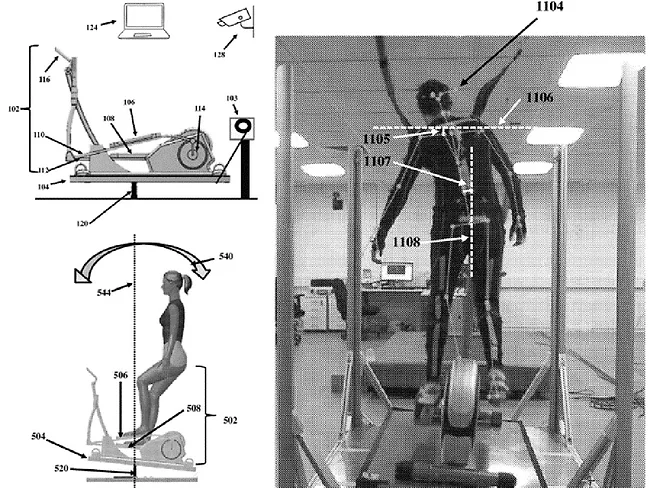
Researchers from Israel’s Ben-Gurion University are seeking patent protection for a revamped mechatronic supported in-place walking training system, such as a stepper or elliptical trainer, that provides various types of expected and unexpected perturbations to improve balance control.
Med-tech happenings, including deals and partnerships, grants, preclinical data and other news in brief: Assure Holdings, Co-Diagnostics, Cryoport, Dupont, Eyenovia.
Access Vascular Inc. (AVI) closed a $22 million series C funding round that it plans to use principally to increase production capacity for its Mimix hydrophilic biomaterial vascular access devices. The company’s catheters are designed to evade identification as foreign bodies, reduce bacterial adhesion and eliminate catheter-related thrombus development.
As a follow-up to the Biden administration’s executive order for artificial intelligence (AI), the U.S. Office of Management and Budget (OMB) has promulgated a memorandum directing federal government agency use of AI.
The U.K. Medicines and Healthcare Products Regulatory Agency (MHRA) has converted its regulatory sandbox for artificial intelligence (AI) into a full-fledged program dubbed the AI-Airlock, described as a regulatory-monitored virtual area in which industry can “generate robust evidence for their advanced technologies.” MHRA said it is focused on ensuring that AI products are available in the U.K. “before they are available anywhere else in the world,” a sign that national economic competitiveness is fostering a regulatory willingness to deal with uncertainty about this class of products.
Immuone Ltd. raised £2 million (US$2.4 million) to fund expansion of its operations to meet growing demand for its 3D human lung model. The company is hoping that its model will replace animal testing which is not always accurate at predicting the impact of drugs on humans. The funding came from the MEIF Proof of Concept & Early Stage Fund, Mercia’s EIS funds and Pioneer Group.

 RSS
RSS