China’s Center for Drug Evaluation and South Korea’s Ministry of Food and Drug Safety cleared Transcenta Holdings to begin phase III pivotal trials of osemitamab (TST-001) in combination with nivolumab and chemotherapy for first-line treatment of HER2-negative, Claudin 18.2 expressing locally advanced or metastatic gastric or gastroesophageal cancer.
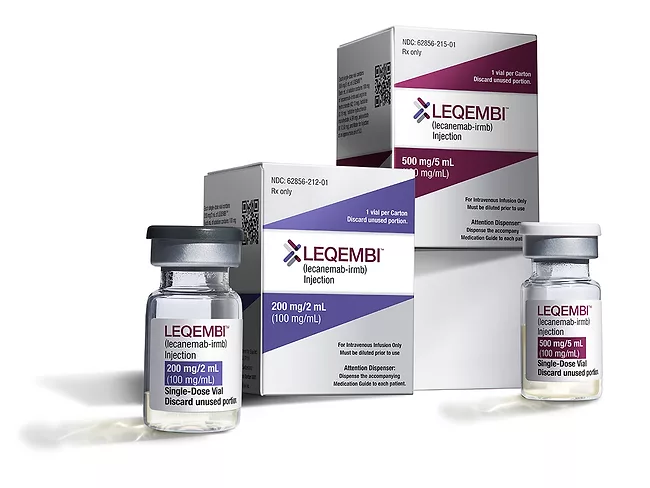
The black box warning appended to the label of Alzheimer’s disease (AD) drug Leqembi (lecanemab) took some on Wall Street mildly aback but failed to surprise others, as analysts mulled what the full approval, granted July 6 by the U.S. FDA, might mean for other developers in the space.
Nanjing Iaso Biotherapeutics Co. Ltd. and Innovent Biologics Inc. said on July 2 they gained China NMPA approval for the first self-developed and in-house manufactured CAR T therapy Fucaso (equecabtagene autoleucel) to treat relapsed or refractory multiple myeloma.
Shenzhen Salubris Pharmaceuticals Co. Ltd. received marketing approval from China’s NMPA for enarodustat as a treatment for anemic patients with chronic kidney disease that are not on dialysis.
The World Health Organization (WHO) recently gave an emergency use listing for SK Bioscience Ltd.’s COVID-19 vaccine called Skycovione, a self-assembled nanoparticle vaccine that targets the SARS-CoV-2 spike protein.
Japan’s Ministry of Health, Labour and Welfare approved Taiho Pharmaceutical Co. Ltd.’s Lytgobi (futibatinib) for unresectable biliary tract cancer harboring fibroblast growth factor receptor 2 (FGFR2) gene fusions that has progressed after chemotherapy.
Japan’s Pharmaceutical and Medical Devices Agency has cleared Healios K.K. and Sumitomo Pharma Co. Ltd. to begin a phase I/II study of HLCR-011, which is composed of retinal pigment epithelial (RPE) cells derived from allogeneic induced pluripotent stem cells (iPS) in patients with RPE tear.
China’s NMPA granted a green light to China Medical System Holdings Ltd.’s tildrakizumab injection to treat adults with moderate to severe plaque psoriasis who are candidates for systemic therapy or phototherapy. Sold under the brand name Ilumetri, tildrakizumab is a humanized lgG1/κ monoclonal antibody designed to selectively bind to the p19 subunit of interleukin-23 (IL-23) and inhibit its interaction with the IL-23 receptor to block the release of pro-inflammatory cytokines and chemokines.
Canbridge Pharmaceuticals Inc. obtained marketing approval from China’s NMPA for CAN-108 (Livmarli; maralixibat chloride oral solution) to treat cholestatic pruritus in 1-year-old or older patients with Alagille syndrome, a development that the company touted for how quickly it followed similar approvals elsewhere.
Incannex Healthcare Ltd. had quietly been developing its commercialization plans for psychedelic clinics well before Australia’s Therapeutic Goods Administration announced it would allow psilocybin and MDMA (3,4-methylenedioxy-methamphetamine) to be prescribed by authorized psychiatrists for treatment-resistant depression and post-traumatic stress disorder.

 RSS
RSS