Netris Pharma SA has delivered positive phase Ib data showing its first-in-class netrin-1 inhibitor NP-137 alleviates resistance to chemotherapy in pancreatic cancer. This could represent an important advance in treating these tumors, which are notoriously resistant to chemotherapy.
Researchers in the U.K. have developed an AI-driven method of identifying viruses in wild animals with the potential to spillover into humans. The technique makes it possible to use the genome sequences of the spike proteins by which viruses enter host cells to assess the potential to infect humans without having to isolate an individual virus and tests its infectivity in the lab.
A new study tracking the genomic evolution of chronic myeloproliferative neoplasms has shown that progression to myelofibrosis or acute myeloid leukemia is encoded in mutations that occur years before the transformation is clinically evident.
Roche Holding AG is making good on its promise to try and convince the EMA of the benefits of Elevidys (delandistrogene moxeparvovec), announcing a further global phase III trial of the Duchenne muscular dystrophy gene therapy.
The ongoing controversy over the effectiveness of anti-amyloid drugs is about to get more heated, after a review of clinical trials showed statistically significant results do not read across to clinical benefit for patients with Alzheimer’s disease.
RNA epigenetics specialist Storm Therapeutics Ltd. has closed a $56 million series C to fund phase II development of its lead RNA enzyme inhibitor, STC-15, in treating myo- and liposarcomas, and announced that the first patient has been treated in the trial.
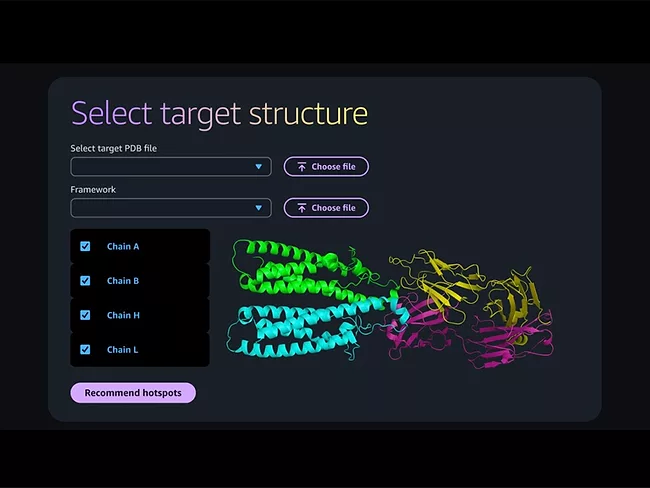
Amazon is extending the reach of its “everything store” into drug R&D with the launch of an artificial intelligence-powered Bio Discovery business. The company has compiled a catalogue of 40-plus foundation models that have been trained on extensive biology datasets and are able to generate and evaluate drug molecules in silico. For now, this covers antibodies only, but it is intended to move into other modalities.
More than four decades on from the approval of the first biologic drug, the industry has reached a tipping point, and biotech drugs now outnumber small molecules in the global R&D pipeline.
Amazon is extending the reach of its “everything store” into drug R&D with the launch of an artificial intelligence-powered Bio Discovery business. The company has compiled a catalogue of 40-plus foundation models that have been trained on extensive biology datasets and are able to generate and evaluate drug molecules in silico. For now, this covers antibodies only, but it is intended to move into other modalities.
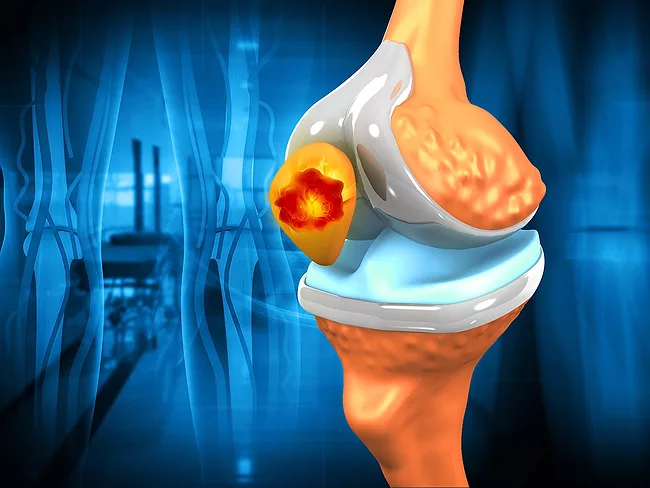
Synox Therapeutics Ltd. is preparing to file for FDA approval of emactuzumab in treating tenosynovial giant cell tumor (TGCT), after announcing positive top-line phase III results.