Crinetics Pharmaceuticals Inc.’s green light under priority review from the U.S. FDA for Palsonify (paltusotine) in first-line acromegaly sets up a not-uncommon David vs. Goliath-type scenario in the indication caused by excessive growth hormone made by the pituitary gland.
Nailing down what Oppenheimer analyst Jay Olson characterized as “a trifecta,” Immuneering Corp. unveiled positive updated survival and safety data from the ongoing phase IIa trial testing oral, once-daily MEK inhibitor atebimetinib (IMM-1-104) in combination with modified gemcitabine/nab-paclitaxe in first-line pancreatic cancer patients.
Word Sept. 4 from Agios Pharmaceuticals Inc. that the U.S. FDA extended the PDUFA date for the sNDA related to Pyrukynd (mitapivat), after the Cambridge, Mass.-based firm submitted a proposed risk evaluation and mitigation strategy (REMS), drew Wall Street’s attention to the regulatory approach.
Uniqure NV rang the bell with a best-case scenario in the pivotal phase I/II study with AMT-130 for the treatment of Huntington’s disease, and shares of the Amsterdam-based firm (NASDAQ:QURE) closed Sept. 24 at $47.50, up $33.84, or 248%. The study met its prespecified primary endpoint, with high-dose AMT-130 turning up a statistically significant slowing of disease progression as measured by the composite Unified Huntington’s Disease Rating Scale at 36 months compared to a propensity score-matched external control.
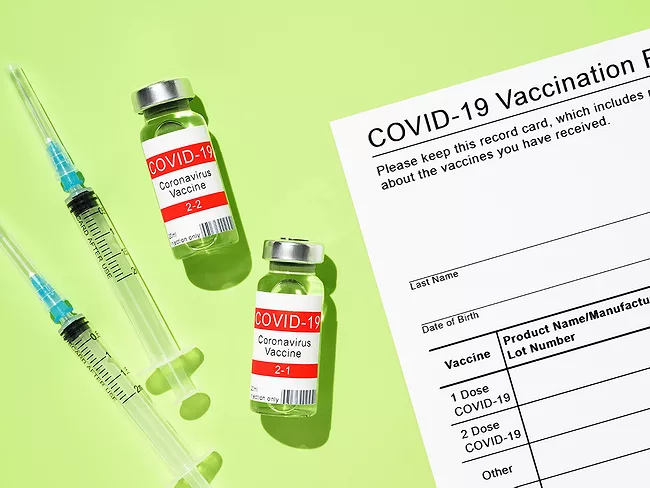
The second day’s meeting of the U.S. CDC’s Advisory Committee for Immunization Practices (ACIP) took up guidelines related to COVID-19 vaccines, of which an outspoken skeptic is Health and Human Services Secretary Robert Kennedy – who in June fired all 17 members of ACIP and replaced them with names more to his liking.
Pfizer Inc. bounced back in a big way from a GLP-1 trip-up this spring by making known its plan to take over what Metsera Inc. CEO Whit Bernard has called the “scale-obsessed” obesity player that he steers. Pfizer has agreed to pay $47.50 each for all of Metsera’s outstanding shares.
The second day’s meeting of the U.S. CDC’s Advisory Committee for Immunization Practices (ACIP) took up guidelines related to COVID-19 vaccines, of which an outspoken skeptic is Health and Human Services Secretary Robert Kennedy – who in June fired all 17 members of ACIP and replaced them with names more to his liking.
As Wall Street awaits phase IIb data from Kala Bio Inc. with KPI-012 in persistent corneal epithelial defect, odds are being weighed for that candidate – and others in development – against the lone approved treatment used in a market already worth more than $1 billion.
“People have some inability to focus on [Regeneron Pharmaceuticals Inc.’s] pipeline,” which stands as “the most prolific in the industry, I would dare to say,” CEO Leonard Schleifer remarked during the Morgan Stanley health care conference Sept. 8. Most recently, Regeneron bragged on two prospects. The ultra-rare disease fibrodysplasia ossificans progressiva (FOP) took center stage Sept. 17 with news that the phase III Optima trial testing fully human monoclonal antibody garetosmab met its primary endpoint. Separately, Regeneron provided updated analyses of the phase II Courage trial that tested new pairings of GLP-1 receptor agonist semaglutide plus the anti-GDF8/anti-myostatin compound trevogrumab, with or without garetosmab, in obesity.
Although cagrilintide from Novo Nordisk A/S proved less than impressive when paired with GLP-1 agonist semaglutide in a single drug known as Cagrisema, the dual long-acting amylin analogue and calcitonin receptor agonist is looking good as a monotherapy in a subanalysis of the phase III Redefine-1 trial.