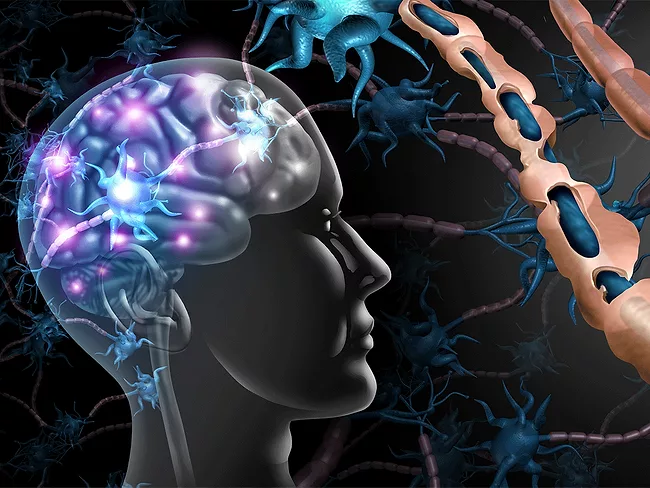
Antibodies to the EBNA1 protein of Epstein-Barr virus can cross-react with glial cell adhesion molecule (GlialCAM), a component of the myelin sheath. The findings are the first to report a mechanism for how viral infections can cause autoimmune disorders.
The enzyme poly [ADP-ribose] polymerase 1 (PARP1) is well known for its role in DNA damage repair, and multiple FDA-approved PARP inhibitors are used to treat BRCA-mutated tumors. Now, researchers at the Wistar Institute have described a role for PARP in regulating the genome of Epstein-Barr virus.
Investigators have identified structural differences between amyloid-beta (Abeta) aggregates in the postmortem brains of patients with inherited and sporadic Alzheimer's disease (AD), respectively. Moreover, both were different from the aggregates that form when Abeta assembles in vitro.
A team led by researchers from the ETH Zürich and the University of Basel has used a combination of mass spectrometry data and machine learning to predict antibiotic resistance of clinical bacterial samples. The results, which were published in the Jan. 10, 2022, issue of Nature Medicine, could speed the identification of optimal antibiotic regimens for patients.
By using data collected over decades in a database of more than 10 million active-duty military personnel, researchers have managed to nail down the connection between Epstein-Barr virus (EBV) infection and multiple sclerosis (MS).
Clinicians at the University of Maryland have transplanted a heart from a genetically modified pig bred by Revivicor Inc., a subsidiary of United Therapeutics Corp., into a patient with end-stage heart failure.
Investigators at the University of Freiburg and Swiss startup Ultimate Medicine have identified a compound produced by the gut microbiome as contributing to age-related cognitive decline by modulating inhibitory synaptic transmission and neural network activity.
Researchers at PTC Biotherapeutics Inc. have identified orally available small-molecule compounds that broadly lowered the levels of mutant huntingtin protein in both the brain and the periphery by affecting its splicing. One of those compounds, PTC-518, is currently in phase I trials as a therapy for Huntington's disease.