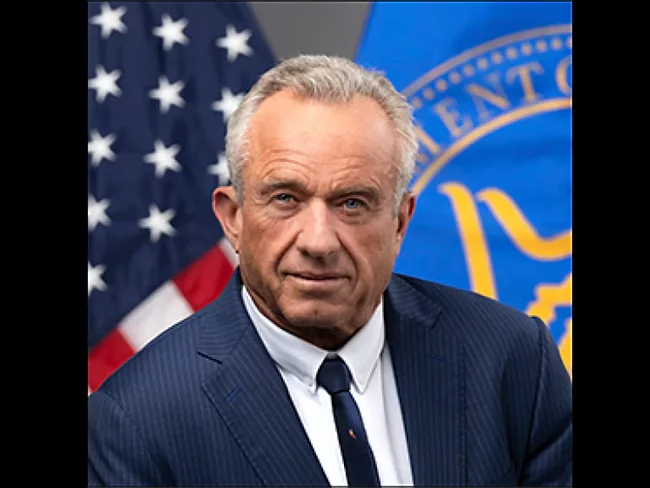
Without using the words “universal” or “nationwide,” a U.S. district judge granted a preliminary injunction July 1 to stop the Department of Health and Human Services’ (HHS) reorganization plan, along with any workforce reduction that’s part of the plan.
While the first meeting of the U.S. CDC’s newly minted Advisory Committee for Immunization Practices (ACIP) is now recent history, questions about the makeup of the committee and its future direction remain unanswered.
Weighing in on the marketing exclusivity provided by the Orphan Drug Act, the U.S. Court of Appeals for the District of Columbia Circuit said the FDA didn’t act beyond its statutory authority when it approved Avadel CNS Pharmaceuticals plc’s narcolepsy drug, Lumryz, for marketing during the exclusivity period granted to Jazz Pharmaceuticals plc’s Xywav, even though both drugs contained the same active ingredient, sodium oxybate, and were approved for the same disease or condition.
Despite the controversies swirling around the June meeting of the U.S. CDC’s Advisory Committee for Immunization Practices (ACIP), the reconstituted committee delivered good news to Merck & Co. Inc. when it voted 5-2 June 26 to recommend that infants younger than 8 months who are not protected by maternal vaccination get one dose of a monoclonal as they head into their first respiratory syncytial virus season.
Although the U.S. CDC’s Advisory Committee for Immunization Practices (ACIP) was scheduled to vote June 25 on recommendations for maternal and pediatric respiratory syncytial virus vaccines, it adjourned by pushing that vote to the second day of the meeting. But before leaving for the day, it got an earful of comments from pediatricians, nurses and even a retired FDA scientist urging the CDC to reinstate the 17 committee members Health and Human Services Secretary Robert Kennedy dismissed two weeks earlier and replaced with eight new members.
Using informed consent to do what Congress couldn’t, the U.S. FDA is flexing its regulatory authority to halt clinical trials that involve sending cells from American patients to China or other adversarial nations for genetic engineering and subsequent infusion back into the patient.
Barely a day before the eight new members of the U.S. CDC’s Advisory Committee for Immunization Practices (ACIP) are supposed to hold their first meeting, Sen. Bill Cassidy, R-La., called for the June 25 meeting to be postponed.
“I expressed deep concerns with your nomination, Secretary Kennedy, and somehow, unfortunately, you have exceeded my expectations in the worst possible ways,” U.S. Rep. Frank Pallone, D-N.J., told Health and Human Services (HHS) Secretary Robert Kennedy during a June 24 House subcommittee hearing.
The June 25-26 meeting of the U.S. CDC’s Advisory Committee for Immunization Practices (ACIP) will be anything but business as usual. In wiping the slate clean just two weeks before the panel was to meet, Health and Human Services Secretary Robert Kennedy made sure of that.
Using informed consent to do what Congress couldn’t, the U.S. FDA is flexing its regulatory authority to halt clinical trials that involve sending cells from American patients to China or other adversarial nations for genetic engineering and subsequent infusion back into the patient.